Dee Estuary Birding
Monthly Newsletter...
August 2026
Newsletter
Some favourite books about birds
Something a bit different this month - I'm going
to describe ten of my favourite books about birds. Some have been
indispensable reference books, which I constantly refer to when
writing my monthly articles, whilst others are just very good reads,
and
all come from my bookshelves at home.
I've put them in order of publication, with the oldest first.
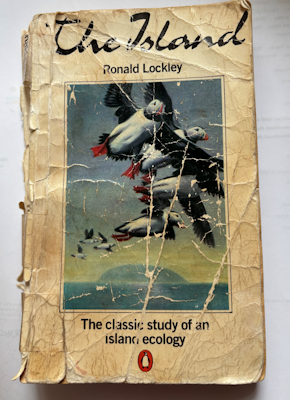
As you see this is a well-loved and much read book. The Island, by Ronald Lockley, was first published in 1969 but this paperback edition came out in 1980. I saw it in a bookshop knowing nothing about Ronald Lockley or the island of Skokholm, but as soon as I saw the front cover I knew I had to buy it.
In the book Ronald Lockley tells the story of how he, with his young family. lived on Skokholm for thirteen years up to the beginning of WW2. He was a very keen and astute observer of wildlife, particularly birds, and the isolated island was seventh heaven for him. He founded the first Bird Observatory in the UK and is probably best known for his pioneering work on Manx Shearwaters - of which there were tens of thousands on the island (as there are now). Very little was known about their breeding biology or their migration in the 1920s, Ronald Lockley found that their incubation period was an astonishing 51 days and the fledgling period 70 days - at the time both figures were the longest known for any bird species. By extensive ringing he established that they migrated to the eastern coast of South America in winter, and he also performed studies of their homing instinct taking birds to such places as the Faroe Islands and Venice (Italy) only to be totally astonished when they quickly returned to their nests within a few days.
There is an obituary on the BBC website and I quote here the first paragraph: "There can be little doubt that RM Lockley was one of the greatest naturalists of his age – arguably of any age. His name will be forever linked to Pembrokeshire and, in particular, to the tiny island of Skokholm off the coast of the west Wales county that he grew to love."
I've never visited Skokholm but in June 2025 I was
lucky enough to stay in a cottage on St Ann's Head in Pembrokeshire,
just over four miles away across the sea from the island. Every evening
from 5pm until it got dark
Manx Shearwaters streamed past the cottage on a broad front heading to
Skokholm and Skomer, I reckoned we were seeing 30,000 go past every
evening. It was a fantastic sight, looking through my 'scope I felt I
was paying homage to the great man.
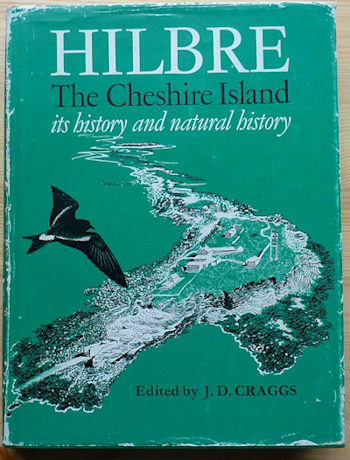
Published in 1982, I inherited this 'Hilbre
Book' from my father who loved the island, as I do. Strictly speaking
it
shouldn't be on this list as it is not really a book about birds but
rather
about Hilbre's 'history and natural history'. But as birds are
mentioned more than any other subject I think it qualifies. There are
five
chapters exclusively about birds including a check-list with many
graphs showing monthly distributions, a chapter comparing bird
migration at Hilbre and Red Rocks and one on Ornithology.
Interestingly, the ornithology chapter reveals a connection with 'The
Island' book described above; there is a list of ringing recoveries
including a Manx Shearwater found dead on Hilbre in July 1962 which had
been ringed
on Skokholm in April 1958.
Also included in the book is a fascinating account written by Ann and Tim Cleeves of their first year on the island as wardens - and their description of the largest Leach's Petrel passage ever recorded on the island, in September 1978, is for me the best bit in the whole book.
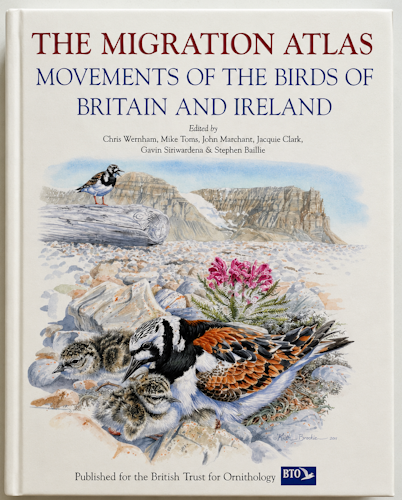
Published by the BTO in 2002, this monumental work
runs to nearly 900 pages and came with a hefty price tag of
£55—equivalent to well over £100 today. But, fascinated as I am by bird
migration and movements, I felt compelled to buy it.
Each species account is richly illustrated with maps, complemented by
detailed descriptions of status, movements and migration patterns.
Although now approaching 25 years old, it remains an invaluable
reference and a testament to the scale and quality of the work involved.
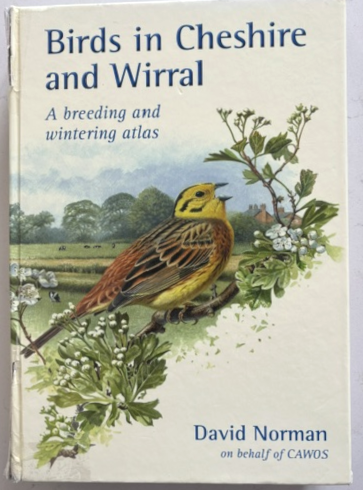
Published in 2008 this landmark publication covers survey work carried out between 2004 and 2007. A hugely useful book covering both the breeding and wintering periods. Each species description comes with several maps and a detailed write up, which includes comparisons with the previous Atlas (1978-84). I'm proud to have made some contribution to this book as I was the north-west Wirral coordinator for the survey work, as well as surveying several tetrads myself.
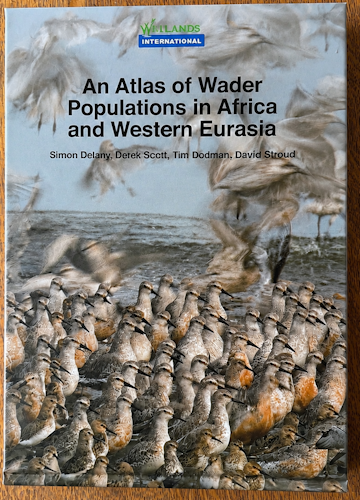
Published in 2009 by Wetlands International, and one I constantly refer to when I'm writing articles about waders. The range and status of each population/race/sub-species for each species is described and mapped. Also major sites for each species is listed, both when on migration and for wintering areas.
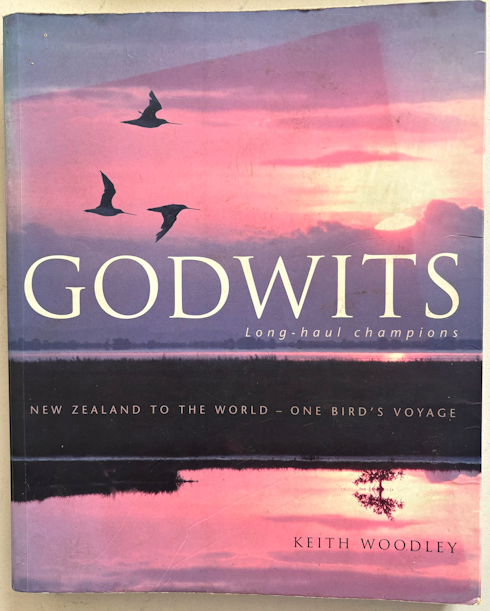
Published in 2009 this is certainly a special favourite. I quote from the first paragraph of the foreword: “The story of the now famous bar-tailed godwit E7 – the first bird to be tracked continuously throughout its unbroken 11,680 km flight from Alaska to New Zealand – loses none of its drama in this outstanding book by Keith Woodley. In addition to providing a useful background of shorebird biology, the author describes vividly his work on the godwit breeding grounds in Alaska."
The book is extensively illustrated with some great photos, and Keith Woodley explains how colour ringing and flagging played a crucial part in uncovering the migration routes of these remarkable birds – something I can particularly appreciate as an obsessive colour-ring spotter myself, which made the book all the more fascinating and personally engaging.
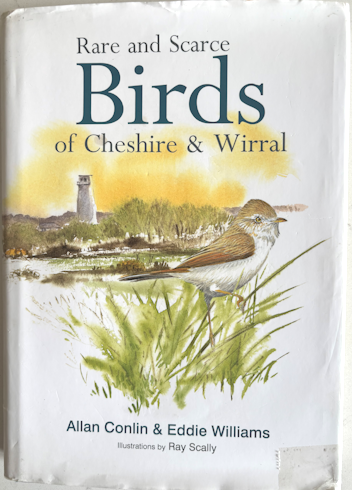
Published in 2017, I'm sure I'm not the only local birder for it to be my immediate go to whenever a rarity turns up in our area. Each rare and scarce species has a page to itself where it's history is described and records listed. and there are also many great photos and drawings. Finder's articles are included for some of the more exotic rarities. In addition there are various site guides, an article on sea-watching and Chapter 2, called 'Changing Status', consists of three articles written by myself - namely "Egrets Galore", "How many scoters?" and "Yellow-browed Warbler influx 2016" - all initially published on this website.
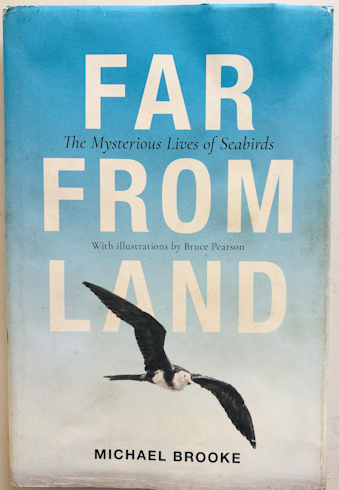
Published in 2018, this very readable book tells the story of the revolution in our understanding of the movements and migrations of seabirds which has taken place over the past 25 years. Thanks to satellite tagging, data loggers etc. we can now not only discover where birds go but how they find food, how often they feed, how long they stay under the water, and how deep they dive, and many other wonderful things!
The author, Michael Brooke, is a world-renowned
seabird researcher currently based in Cambridge University, and here
there is another connection with "The Island" book as he completed
a seabird DPil (PhD) at Oxford while employed as warden of Skokholm
Bird Observatory. He got his PhD studying Manx Shearwaters, continuing
the work of Ronald Lockley, and ended up writing a
monograph - The Manx Shearwater.
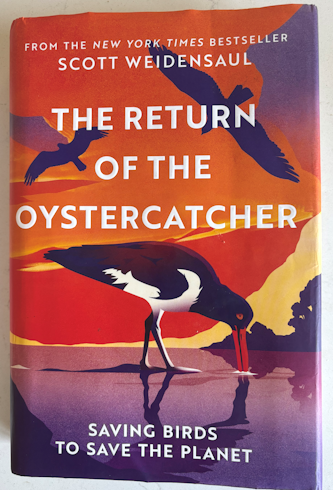
Published in 2026 this was given to me as a recent birthday present. It's an optimistic book full of good news stories where conservationists, including ordinary people like you and me, are doing groundbreaking work to reverse declines and habitat losses. The author, Scott Weindensaul, is a prolific nature writer in the USA as well as being an active field researcher himself. Although the main premise of the book is hope and optimism Scott doesn't hide the many problems and negative issues which inevitably arise from these projects, but this gives the book a good balance.
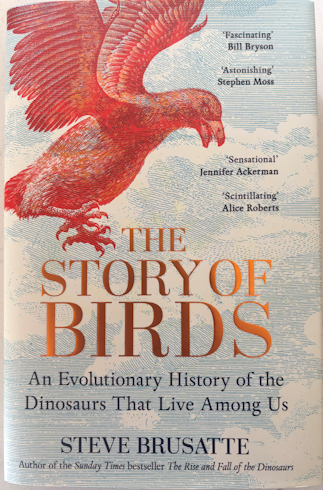
Published as recently as June 2026, this was another welcome birthday present. Many books about birds that touch on prehistory tend to begin at the end of the last Ice Age, around 12,000 years ago. This book, however, reaches back some 150 million years.
Most readers will already know that birds are now firmly understood to be dinosaurs—the only branch to have survived the asteroid impact 65 million years ago. What may be less widely appreciated is just how much our understanding of life on Earth has advanced over the past two decades. A succession of extraordinary fossil discoveries, combined with major technological advances in the analysis of DNA and other organic materials, has transformed the field. As a result, Steve Brusatte is able to present a richly detailed “story of birds,” grounded in exciting recent discoveries and rigorous science.
One particularly intriguing aspect is the contrast between our own distant ancestors and those of birds. While our mammalian forebears 150 million years ago were small, shrew-like creatures hiding in the undergrowth from dinosaurs, the ancestors of modern birds were already remarkably bird-like—feathered, capable of flight, and broadly similar in size and behaviour to many species we see today.
Richard Smith
Colour Ring Report
A good collection of colour-ringed birds for this
month. It's particularly pleasing to have seen several colour ringed
Black-headed Gulls after my article about them in the July Newsletter.
We are still waiting for feedback on some birds so there is already a
lot to report for next month's newsletter.
Little Egrets
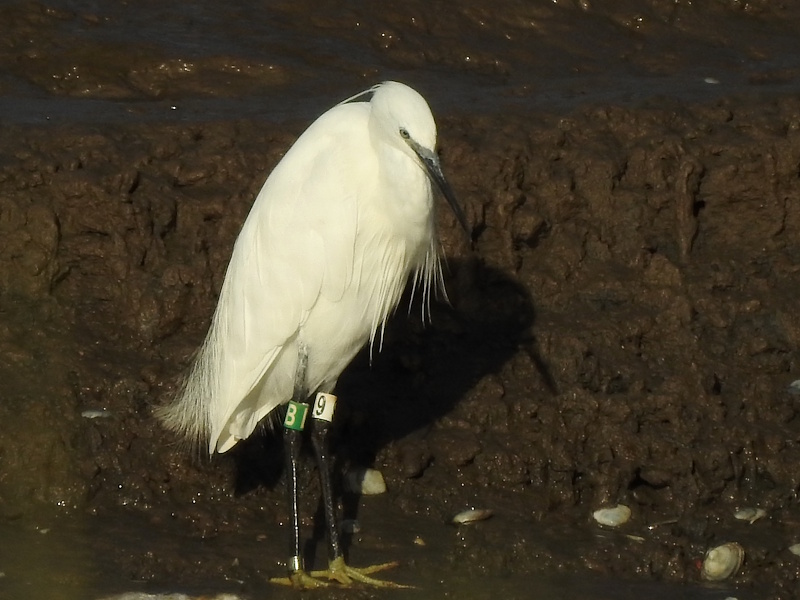
With the channel between Heswall and Thurstaston running close to the beach it has always been a good place to spot colour-ringed Little Egrets, with the majority of our records coming in summer after the breeding Season.
White 9 - Green B
Ringed at Hale Duck Decoy in May 2023, as a chick.
All records come from Thurstaston and Heswall:
July and August 2023, April and August 2024, June 2025 and July 2026.
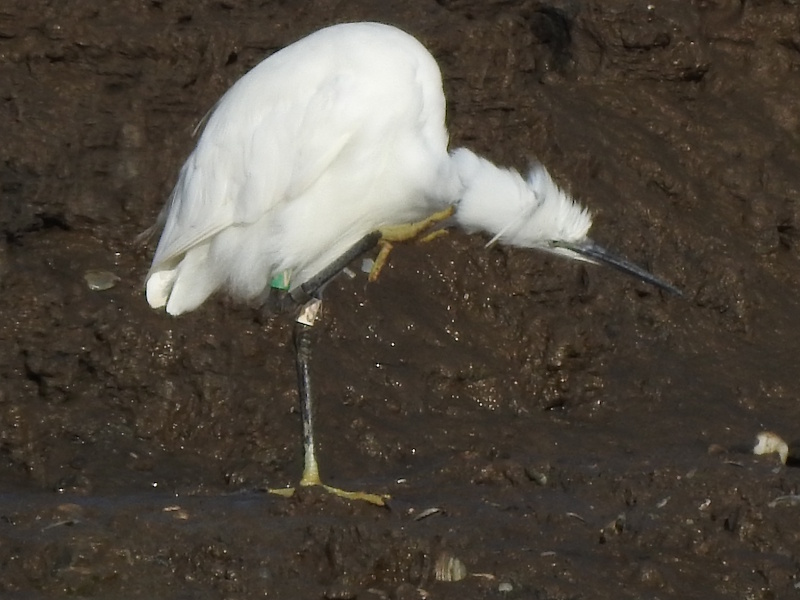
Ringed at Hale duck Decoy in May 2026, as a chick
Recorded at Heswall Shore on 06/07/2026.
Curlew
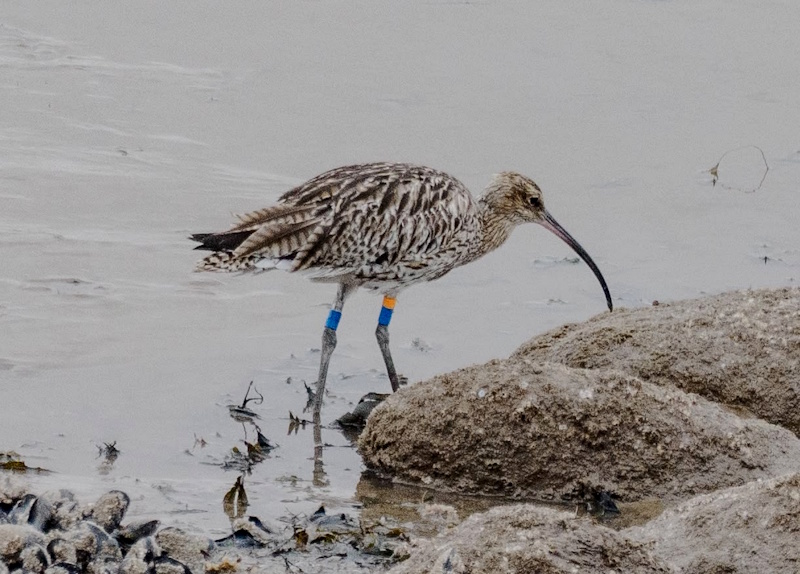
This is one which has featured before in these Reports.
Ringed at Nordhorn Zoo, western Germany, in June 2024 as a chick, it
was released as a juvenile as part of a headstarting program.
Most records have come from Hilbre and it was seen there from August to
November 2024 and July to September 2025, it was also seen at Hoylake
in August 2025.
The latest report comes from Hilbre, on 18/07/2026.
Black-tailed Godwits
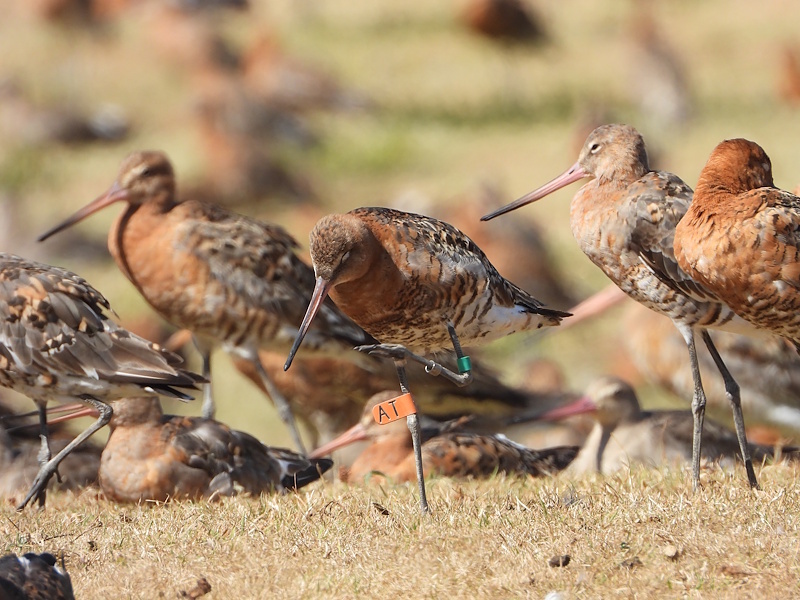
Green - Orange flag (AT)
Ringed at Bangor Harbour in January 2024.
First record came from Burton Mere Wetlands in August 2024 followed by
Caldy Wilfowl Collection in October 2024.
That winter (2024/25) it was back in North Wales being spotted at
Llanfairfechan and the Spinnies at Ogwen. It then unexpectedly turned
up in South Wales in July 2025 when it was on the Loughor Estuary
before making its way back to Caldy where it stayed during August and
September.
Overwinter 2025/26 saw back in North Wales including a trip to Anglesey
before being spotted again at Caldy on 19/07/2026, and also at
Thurstaston two days later,
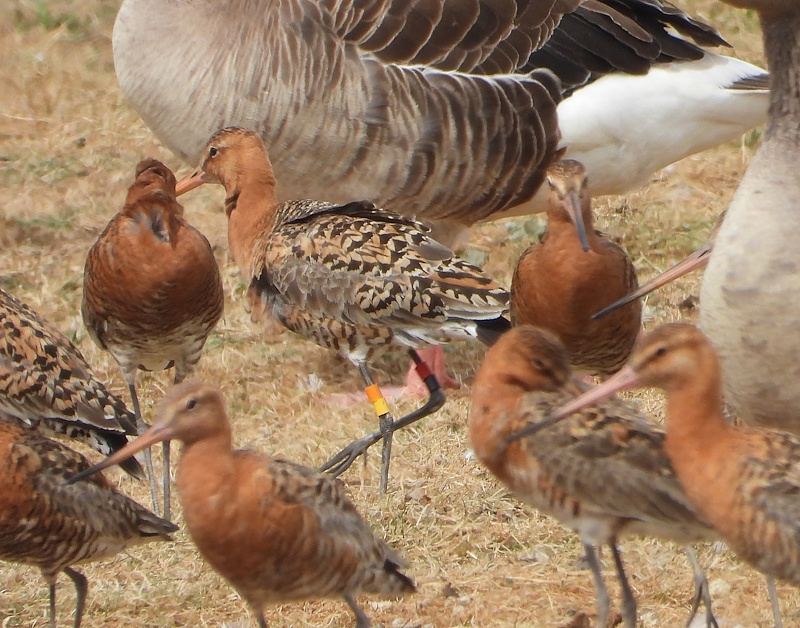
OY - RN
Ringed at Arnabaeli in southern Iceland in June 2017, as a chick.
We were the first ones to see it's arrival in the UK when it was seen
at Caldy in early August 2017.
As an adult it has been a regular and is usually one of the
first to arrive back after breeding - this year it was spotted
on July 6th.
There is a total of 168 records for this bird, nearly all at the Caldy
Wildfowl Collection, and nearly all in summer and autumn. Rare records
away from there includes a visit to Atlantic coast of France as a
non-breeding bird in May 2018, since then the furthest away it has been
seen is Frosham Marsh and the Ribble Estuary.
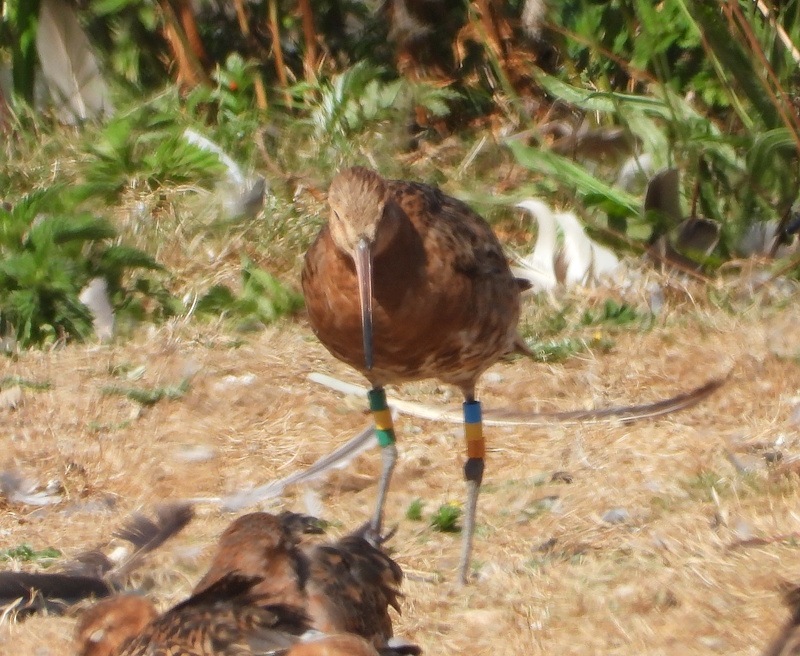
BYO - GYG
It was a big surprise when this bird was spotted in the throng of
'Blackwits' at Caldy on July 19th as it has been almost exactly 11
years since it was last in the Dee Estuary area when I saw it at the
Gilroy Scrape (West Kirby) in July 2015. Before arriving at Caldy this
year it was recorded at RSPB Conwy on July 14th, probably it's first
landfall after flying from Iceland.
It was ringed on the River Alde, Suffolk in October
2013.
This bird usually spends late summer and autumn in south-east England
with most records coming from the River Orwell and the Stour Estuary.
It then makes its way west and most winter records are from the Exe
estuary.
Somewhat unexpectedly, spring sees it flying east to the Netherlands
before it heads
north-west to Iceland to breed. There is just the one record from
Iceland and that's at the staging area called Alftafjorour in the
south-east where many hundreds gather to feed up before dispersing
across the island to breed.
Black-headed Gulls
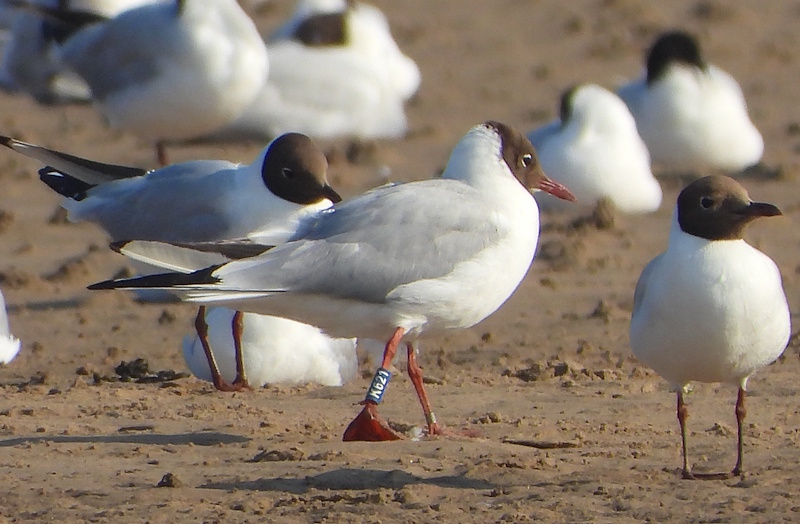
Blue (K621)
Ringed at Trmlya Fish Farm, Petrikov District, Belarus, in June 2024.
Recorded at Heaton Park Lake, Prestwich, in September 2025, and at West
Kirby Shore on 11/07/2026.
Another exciting record from the Baltic!
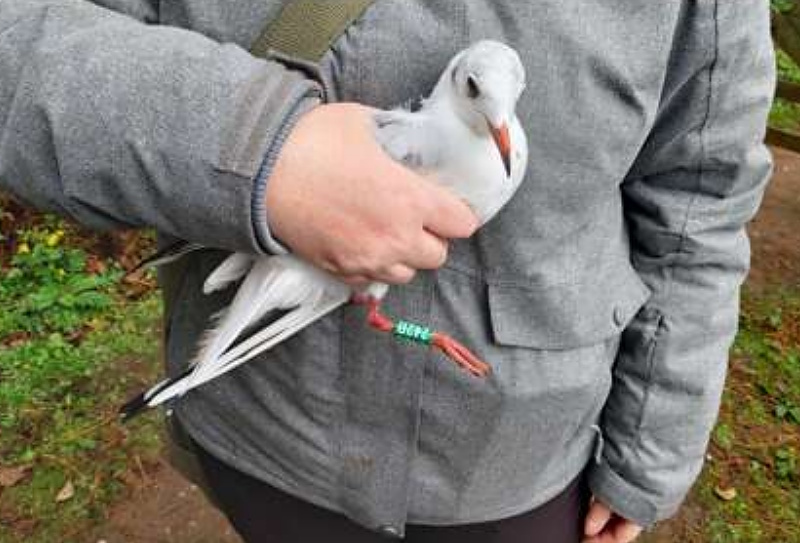
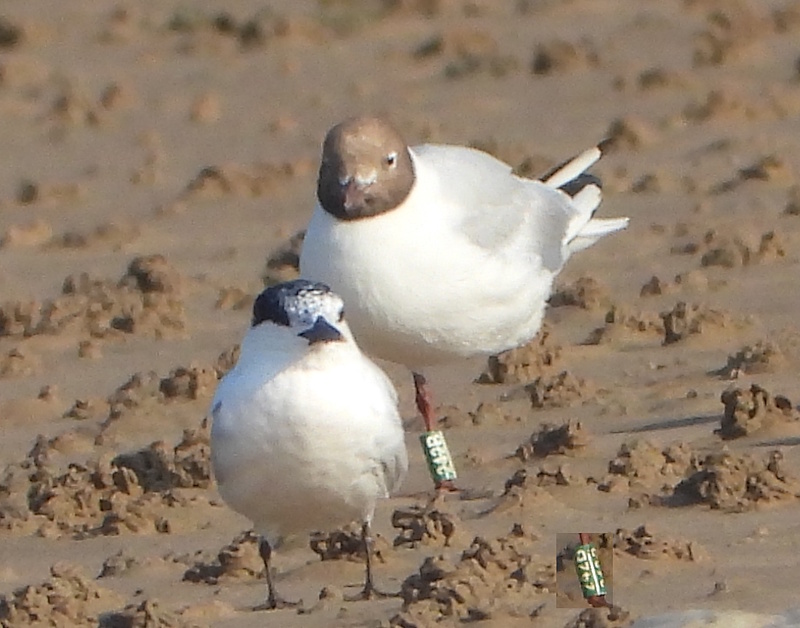
Ringed at Center Parcs, Sherwood Forest, Notts, in
October 2022.
It spends the winter in and around Center Parcs, Notts, being seen
there 2022/23, and Jan and Nov 2024.
Recorded on West Kirby Shore in July and August 2024, and 11/07/2026.
Blue (231E)
Ringed at Redesmere, Cheshire, in January 2022.
It has been recorded a further 16 times at Redesmere, but only between
January and early March.
Recorded off Middle Eye on 23/07/2026.
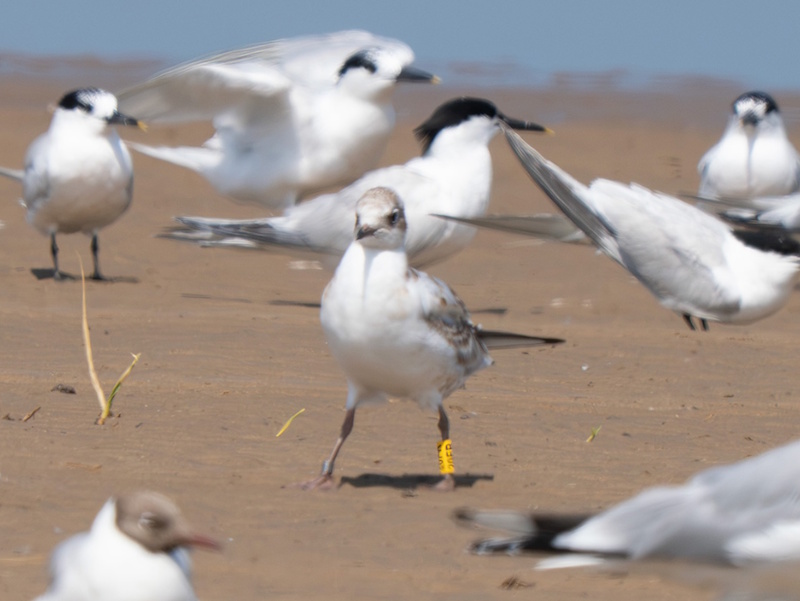
We usually don't see many colour ringed juveniles but this year was an exception with three spotted through July. As you can see a couple have travelled a fair distance since they fledged.
Yellow (2OFR)
Ringed at Flixton, Suffolk, in June 2026, as a chick.
Recorded at Hoylake on 15/07/2026.
Black (2515)
Ringed at Shotton Lagoons in June
2026, as a chick.
Blue (2CSN)
Ringed at Rutland Water in June 2026, as a chick
Recorded on Hoylake Shore on 15/07/2026.
Common Terns
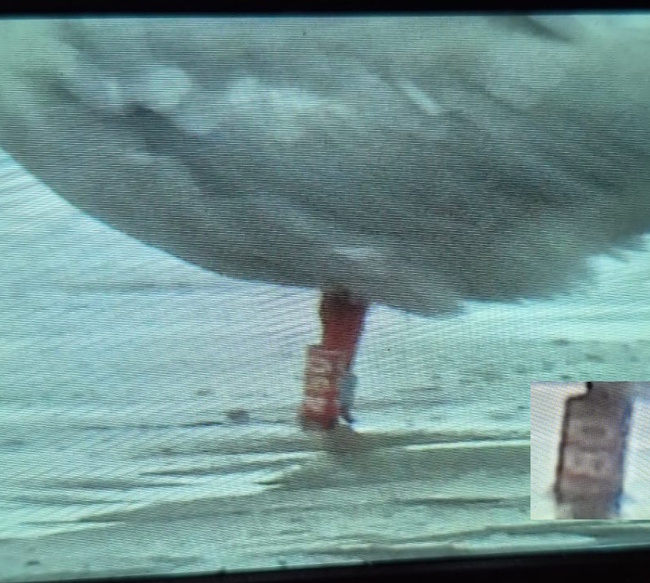
Red (461) and Red (480)
Both these Common Terns were on Leasowe Shore in early September 2025,
but for various resons we've only just got feedback for them.
Both were ringed at Conder Pool, Conder Green
(Lancs) as
chicks. 461 in June 2022 and 480 in July 2023.
They have both been recorded regularly back at Conder Pool since
ringing, including over the breeding season this year, 2026.
As a non-breeding young bird 480 showed an
interesting movement in 2025 being at Conder Pool on 15/06/2025 before
flying to Seaforth the following day where it stayed at least a week
before returning to Conder
Green in July that year.
Common Terns have been breeding at Conder Pool for a few years but until 2023 there were only only two or three pairs. The installation, by the Flyde bird club and RSPB volunteers, of a raft before the 2023 season has resulted in a big increase in pairs nesting and this year, 2026, they had 26 pairs.
Colour Rings were recorded by Richard
Smith, Stephen
Hinde, Tony Ormond, Sean O'Hara, Tim Kinch, Colin Schofield, Elliot
Montieth, Charles Farnell, Steve Williams, Alan Hitchmough and Tim Vaughan..
Richard Smith
July Bird News
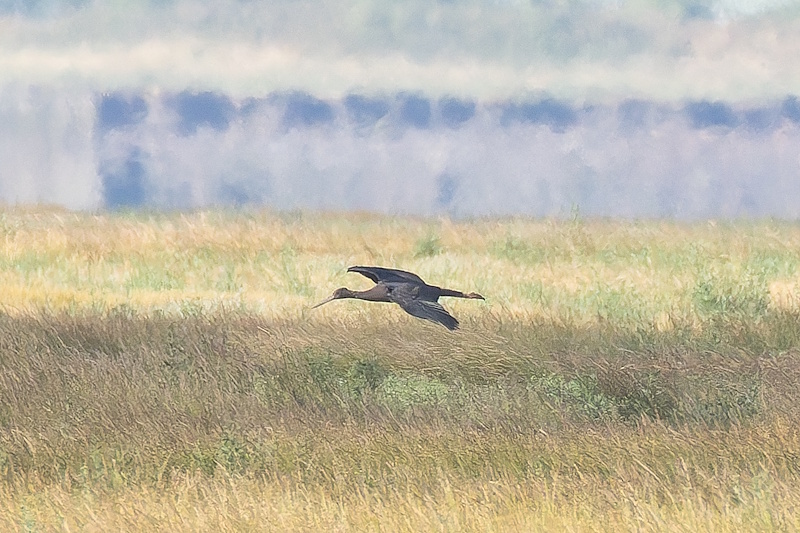
Two Black Storks made for a fantastic end to the month, seen flying past the Old Baths car park at Parkgate on the evening of the 31st. They landed on the marsh but weren't relocated until the next day when they gave good, if somewhat distant, views. We are assuming that these are the same birds that had been recorded at several sites in Cornwall on the 28th, and then seen flying north over Chepstow on the 30th.
Black Storks are a BBRC rarity (i.e. national rarity) and, on the assumption these birds will be accepted, they are the first ones to be officially recorded on the Dee Estuary, one reported flying over Burton Marsh in 2005 does not seem to have been submitted. There has been a previous record in Cheshire with one over Marton Heath in April 2021.
Four Bee-eaters over Puddington, on the 13th, was
another great record, they were both heard and seen. A drake Cinnamon Teal was at
Burton Mere Wetlands from the 12th to the 14th, a nice bird to see but,
as so many are kept in wildfowl ccollections with a tendency to escape,
these are only ever accepted as of 'Unknown Origin'. A Black Guillemot
was a nice find in Hilbre gutter on the 22nd.
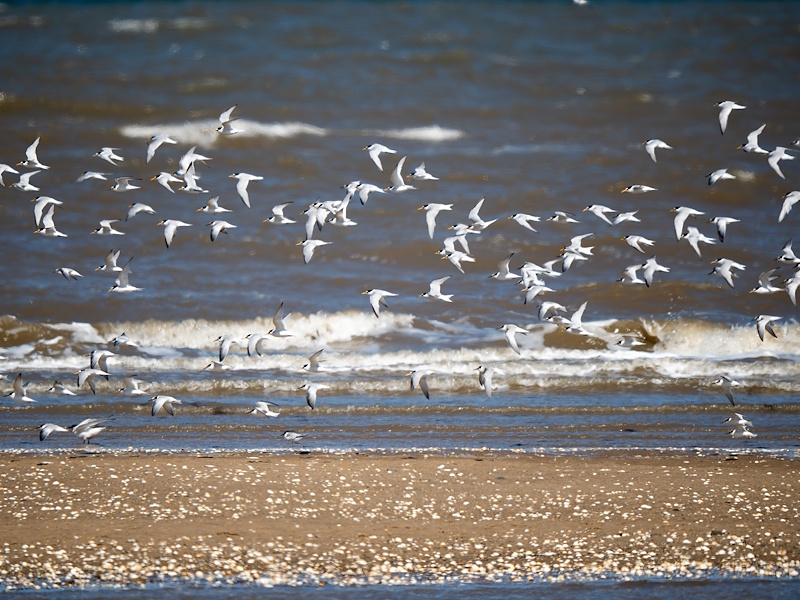
Our tern colonies had somewhat mixed success this year. The Common Terns at Shotton deserted because of a serious predation incident. Peter Coffey (Merseyside Rining Group) tells me that they don't know what predator it was but they are confident no adults were killed, so at least the breeding stock remains intact. But after the ravages of Bird Flu they could have done without a barren season. Peter says they will modify the rafts to try and stop a future incident.
I have some preliminary numbers from the Little Tern colonies at Gronant and Point of Ayr. At Gronant there were only 52 nests but the number of fladglings were high with at least 150, that's a productiviy of 2.9 - the highest they've ever had at Gronant so I hope the final numbers confirm this. The nearby Point of Ayr colony has had two blank years so it was good to see 37 pairs producing 48 fledglings this year, only 2022, with 39 pairs, have produced higher counts.
There was a nice post-breeding gathering of Little
Terns on the estuary, 49 were at Hilbre on the 22nd but 450 at Point of
Ayr at the end of the month was an amazinfg sight - with an estimated
50% juveniles in the flock. This flock will almost certainly have
included birds from other sites, such as in Cumbria and the east coast
of Ireland, but they seemed to have had a good breeding season.
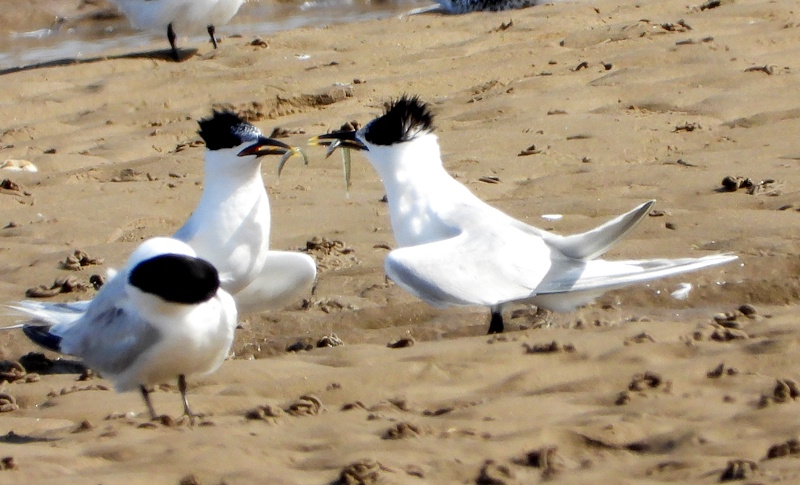
Sandwich Terns returned to the estuary in good numbers with max counts of 474 at Hilbre, 300 at Point of Ayr and 350 at Hoylake, plenty of juveniles were seen so they seem to have had a good breeding season.
Shotton may have had a disastrous Common Tern
breeding season but they did have their first pair of breeding
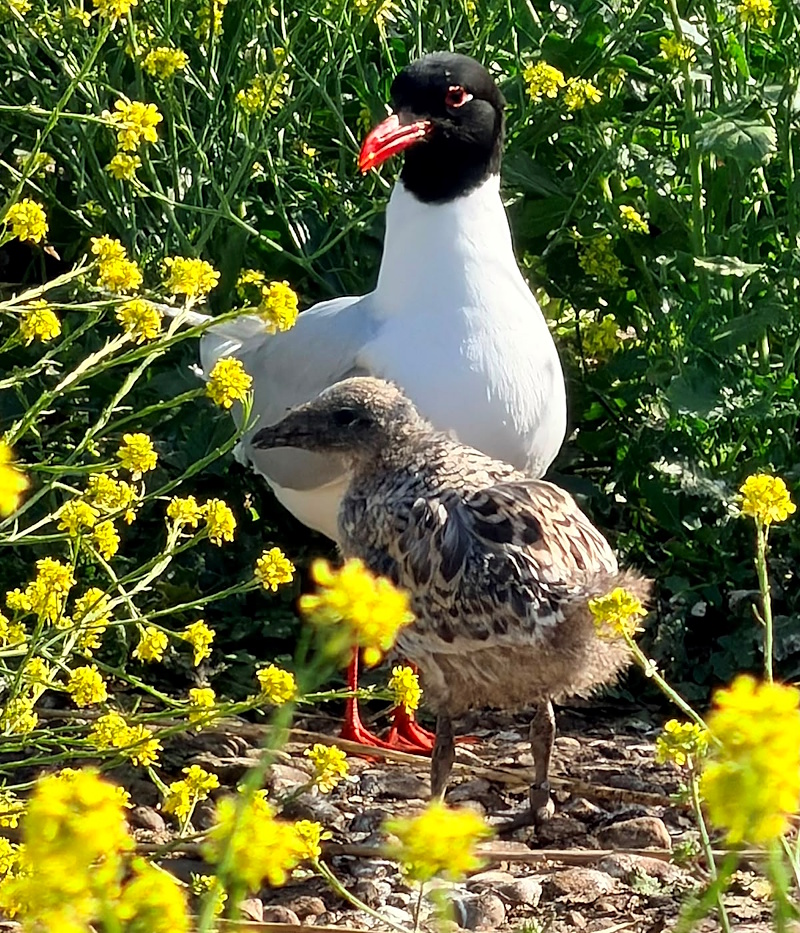
Mediterranean Gulls which fledged one chick. They are such photogenic
birds as the photo below shows. Burton Mere Wetlands had several pairs
breeding, producing at least ten juveniles. Many Mediterranean Gulls
gather off Heswall and Thurstaston after the breeding season and the
highest count this year has been 28 so far, with smaller numbers
elsewhere.
Several Quails were heard calling through the month including several between Burton and Neston marsh, one in a field at Lower Heswalll and one in the saltmarsh at West Kirby.
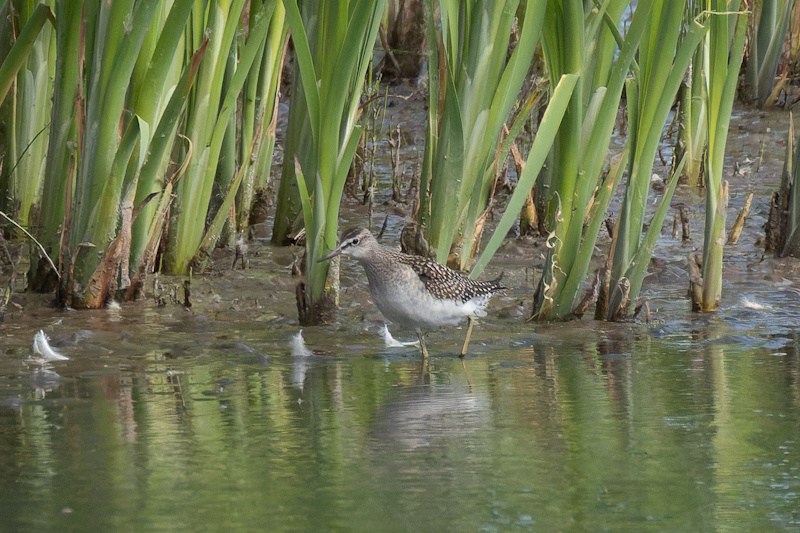
Ten Spoonbills have been regular at Parkgate and
there was a Wood Sandpiper there on the 31st, with singles also at
Burton Mere Wetlands and Burton Point. Also at Parkgate has been a good
passage of Greenshanks with a max count of at least 30.
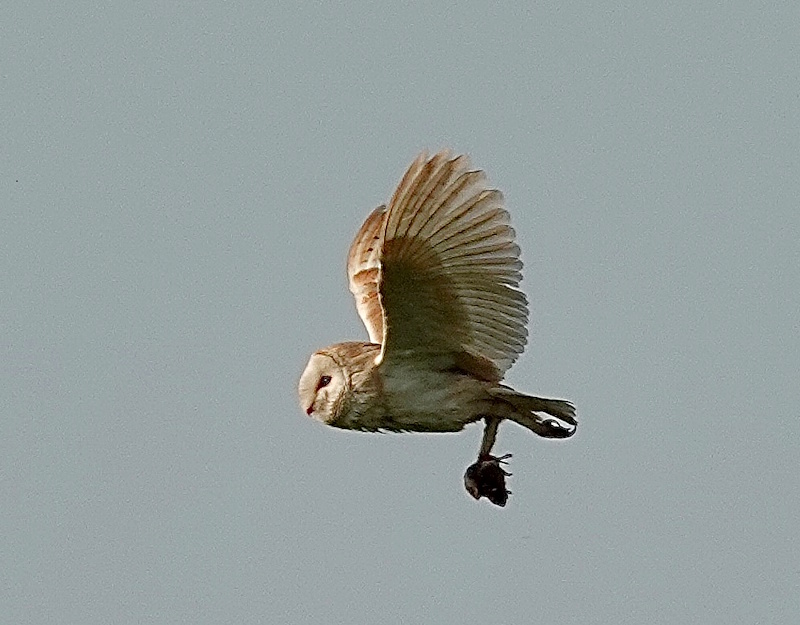
Barn Owls were seen just about daily at Parkgate with birds also at Decca Pools and Leasowe Lighthouse.
What to expect in August
Waders and Terns. Waders will be returning in good numbers with many passing through on their way to spend the winter in Africa. If the mid-month high tides coincide with the peak of the migration expect the beaches at Hoylake, West Kirby, Point of Ayr and Gronant to be covered in Ringed Plovers and Dunlin. There will also be Grey Plovers looking splendid in their breeding plumage and many other species including Knots and Bar-tailed Godwits. I look forward to seeing the young birds, some years there can be large numbers of juveniles and then we know they've had a good breeding season. Picking out young Sanderlings is a nice challenge but easy enough once you know what to look out for. A scarcer wader is the Curlew Sandpiper and we often get a few adults coming through early in the month whilst the first juveniles may well start to arrive before the month-end.
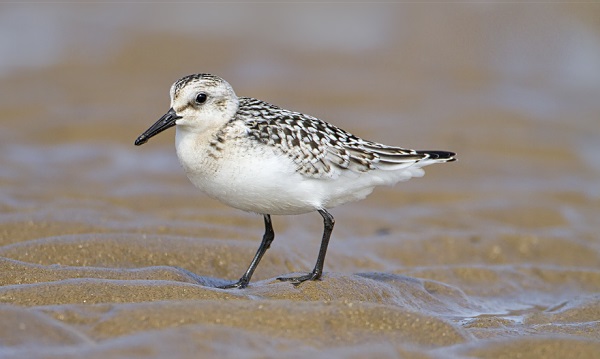
The breeding season for all three of our tern species will be over in
August - Sandwich Terns will be making a racket on the beaches from New
Brighton to Gronant, but we should see Common Terns and Little Terns as
well. If you go out towards Little Eye on a rising tide Little Terns
can often be seen fishing in the shallow water along Hilbre Gutter, a
delightful sight.
Sea watching can be good if we get any strong
westerlies with Manx Shearwaters, Gannets and Arctic Skuas to be seen,
and there is always a chance of a Storm Petrel or two. A north-west
gale at the end of the month could possibly blow in an early Leach's
Petrel.
13th 12.26hrs (BST) 9.4m
14th 13.08hrs (BST) 9.5m
15th 13.47hrs (BST) 9.4m