Dee Estuary Birding
Monthly Newsletter...
December 2025
Newsletter
Cormorants and Shags
Cormorants
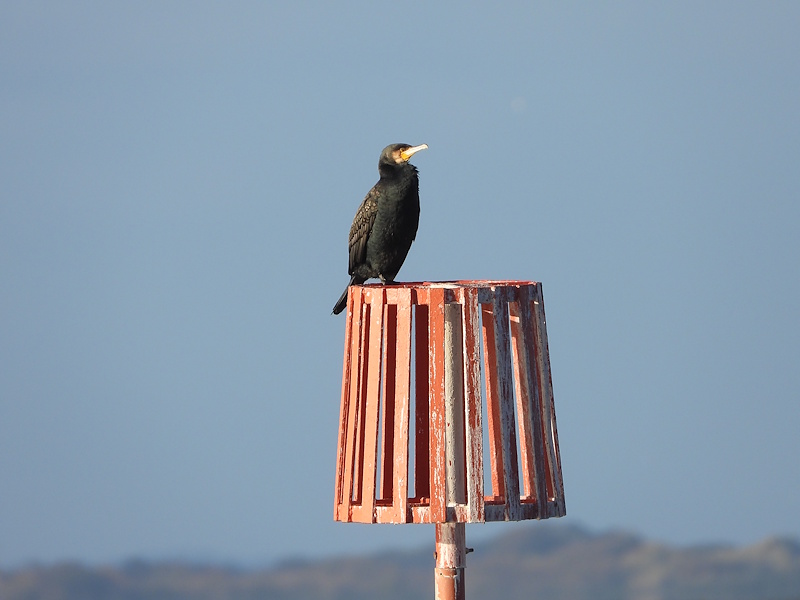
I couldn't help but laugh, the cormorants were in a
long line all plodding along across the sand, like those sad looking
clowns with huge oversize shoes! Normally you see Cormorants just
standing (often with wings stretched), flying or swimming but these
were walking in front of the incoming tide on East Hoyle Bank off
Hoylake. We've had good numbers on East Hoyle this autumn, including a
big count of 900 on November 20th, and up to 100 have stayed through
the high
tide at Hoylake instead of all flying off as they often do. I have been
scanning through them with my 'scope looking for colour rings
and I found quite a few, many with interesting histories which I
thought I'd share with you in this article - see map below.
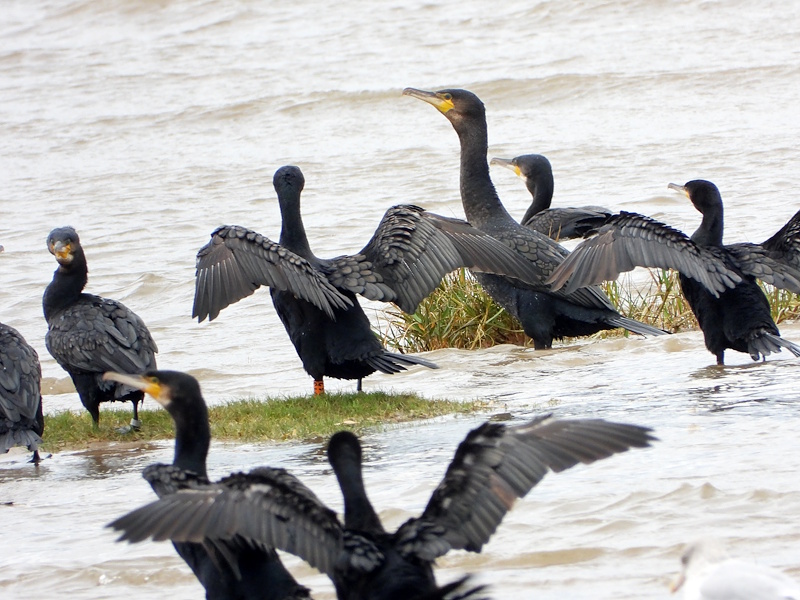
Ten years ago I wrote an article - Species Spotlight - Cormorant - in response to quite a dramatic change in the status of Cormorants on the Dee Estuary with a big increase in numbers, a change in the monthly distribution (peak numbers shifted from September to December) and the discovery of a large over-night roost on the edge of Parkgate marsh. These two bar charts bring us up to date:
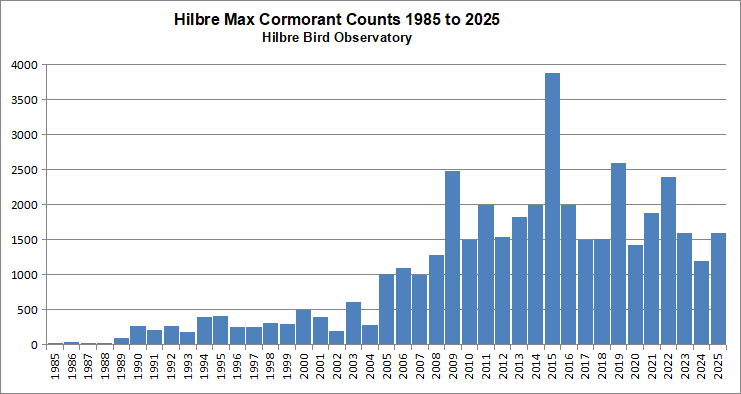
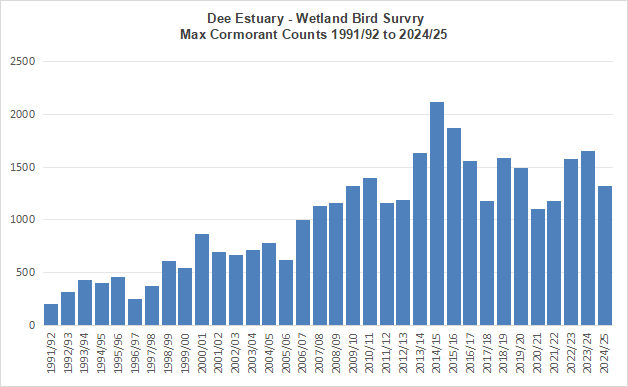
You can see the sharp increase in numbers up to 2015 which is when I wrote that last article. Since then numbers have plateaued out at a slightly lower level. Although the roost at Parkgate was only discovered in 2015 it seems likely the birds started to roost there well before then, the first mention of Cormorants flying out of the estuary at dawn, which coincided with both a sharp increase in numbers and a mid-winter peak, was in 2009 so it seems very likely they were roosting overnight in the estuary by then. There are other over-night roost sites nearby with up to 100 at Seaforth, 400+ on the Alt and, judging by the hundreds leaving Southport at dawn, there appears to be a major roost on the island in the middle of Southport Marine Lake.
The WeBS counts take place at high tide, of course,
and, as already mentioned, a major site is Hoylake where there was a
good count of 740 in December 2024. Little Eye typically has 200 to
300 birds whereas Gronant Beach usually has around 350 to 400.
Colour Rings
All the colour ringed Cormorants we see on the Dee/North Wirral have
been ringed as chicks on the nest. The nearest big colonies are at Hale
Duck Decoy (on the Mersey estuary), Little Orme and Puffin Island
(Anglesey). The increase in nests at Hale has been remarkable, they
only started nesting there in 2013 with two pairs, by 2017 it was up to
134 pairs, 213 in 2022 and I hear reports of 236 nests this year, 2025.
Puffin Island was cleared of rats at the beginning of this century and
this has led to an increase in the number of nests there from 353 to
476 (Seabirds Count census). Maybe as a result of birds moving to
Puffin Island the number of nests at Little Orme has fallen from 452 in
2003 to 250 in 2023 (Welsh Gov fact sheet). The Merseyside Ringing
Group at Hale, and the SCAN Ringing Group at Puffin Island, do a
splended job colour ringing chicks and most of the ones we see here are
from these two sites.
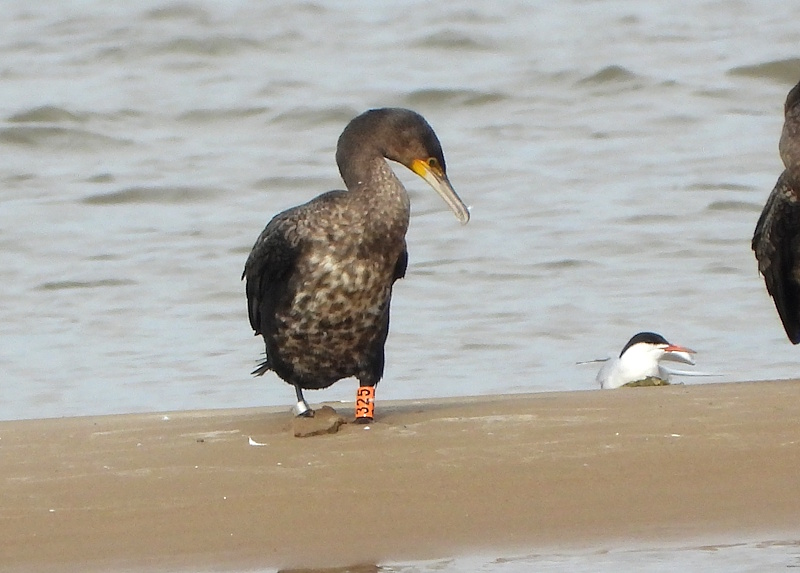
Ringed at Hale Duck Decoy in June 2024 and seen at Hilbre in July 2025 and at Hoylake in September 2025
The map below shows the locations where the birds recorded on the Dee Estuary/North Wirral in 2025 have been sighted elsewhere (including ringing sites), mostly local movements but it's amazing how much they move around.
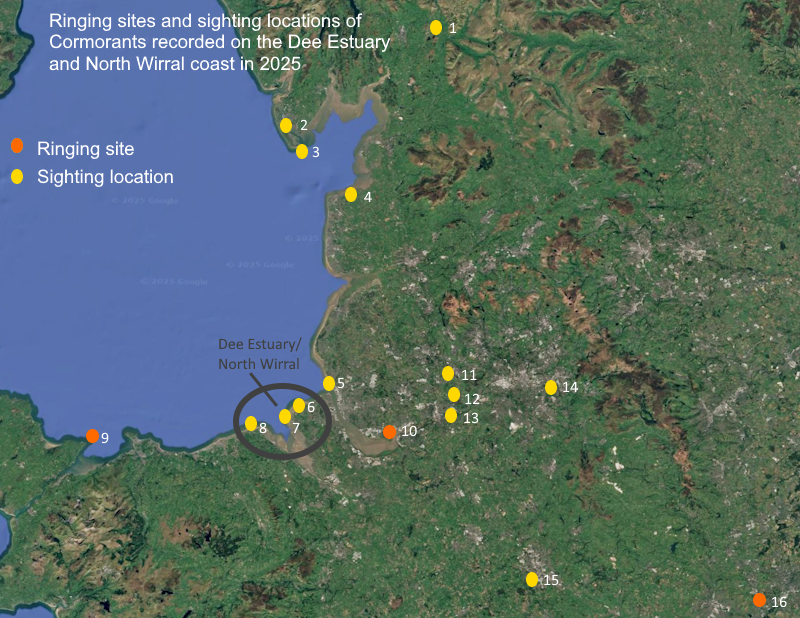
Key to map:
1.Whinfell Tarn Cumbria.
2. Cavendish Dock, Barrow-in-Furness.
3. Walney Island, Morecambe Bay.
4. Pressall Flash, Lans.
5. Seaforth Nature Reserve.
6. Hoylake.
7. Hilbre.
8. Gronant.
9. Puffin Island (ringing site).
10. Hale duck Decoy (ringing site).
11. Pennington Flash, Lancs.
12. Silver Lane Pools, Warrington.
13. Woolston Eyes.
14. Audenshaw Reservoir, Manchester.
15. Trentham Gardens, Stoke.
16. Attenborough Gravel Pits, Notts (rining site).
Shags
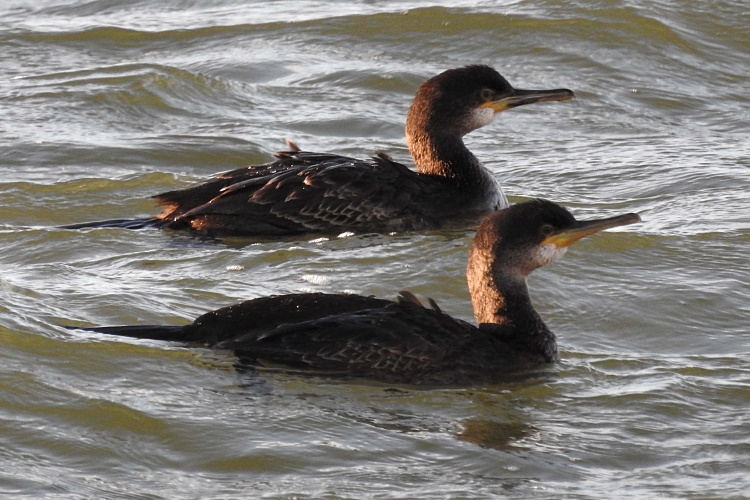
The above is a quote from T. Hedley Bell's Supplement to The Birds of
Cheshire (1967), and nothing much has changed since! Although a regular
visitor they remain very scarce and most records are of a single birds,
sometimes two or three but any more than that is rare. But it just so
happens that October 2025 was one such rare occasion when we had a
flock in double figures on two different dates.
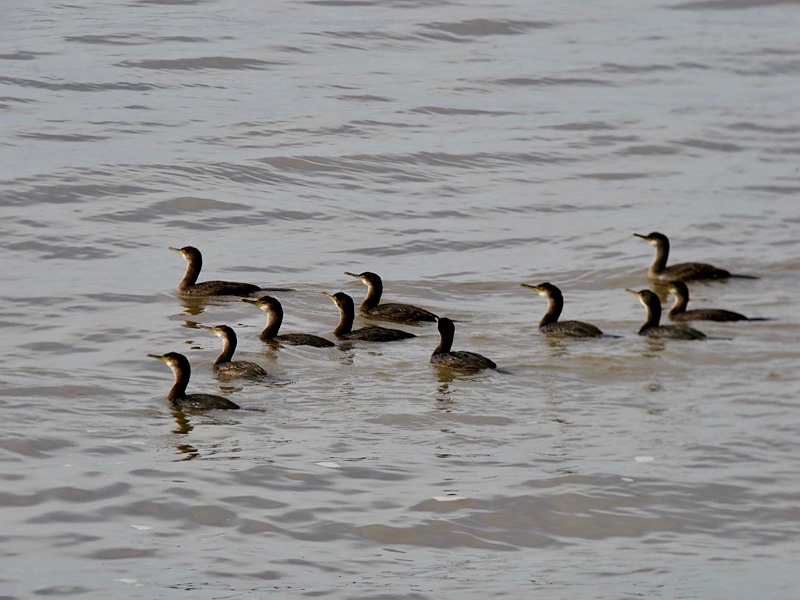
On October 6th (2025) a flock of 13 drifted past
Hilbre
Bird
Observatory on the outgoing tide, a remarkable total as the last
double-figure count was way back in 1982. Interestingly, Professor
Craggs, in his landmark Hilbre book (1982), said this about Shags
"Perhaps there is a tendency for autumn birds to occur most frequently
after gales. Storm driven birds often stay in the locality for a few
day after such gales", so I'm sure it's no coincidence that this flock
turned up a day after the strong winds of October 4th and 5th. And they
did stay in the locality as on the 17th a total of 15 were
spotted including a flock of 14.
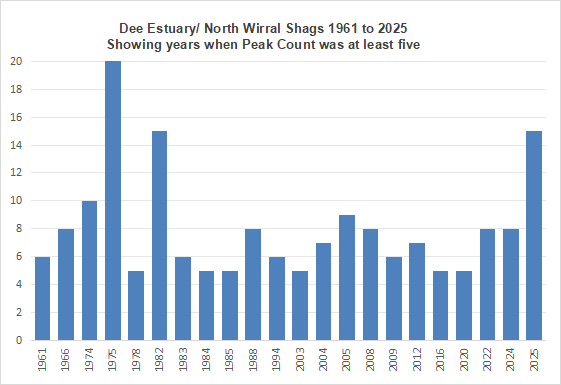
In 64 years (i.e. since 1961) there have been 22 years when counts have been five or more, and just four years when they have been in double figures - and none since 1982 until this last October. The noughties seem to have been a good decade with five years of five or more, and it was also a decade when there were many records with 2008 particularly good with birds seen on 125 days through the year and eight present at Hilbre on several dates in September and October.
Most records are of young birds including those seen
this autumn. They are likely to have hatched along the coast of North
Wales with the nearest breeding sites on the Little Orme and the
adjacent Great Orme. I haven't been able to ascertain numbers of nests
at these sites but it likely be less than the 122 nests quoted for
Puffin
Island (Birds of Wales, 2021). The Isle of Man is also a possible
source for birds arriving in our area, and the latest nest estimate for
the island is 339, and you can certainly imagine a north-west gale
blowing young Shags from there towards our coast.
Richard Smith
Colour Ring Report
Lesser Black-backed Gull
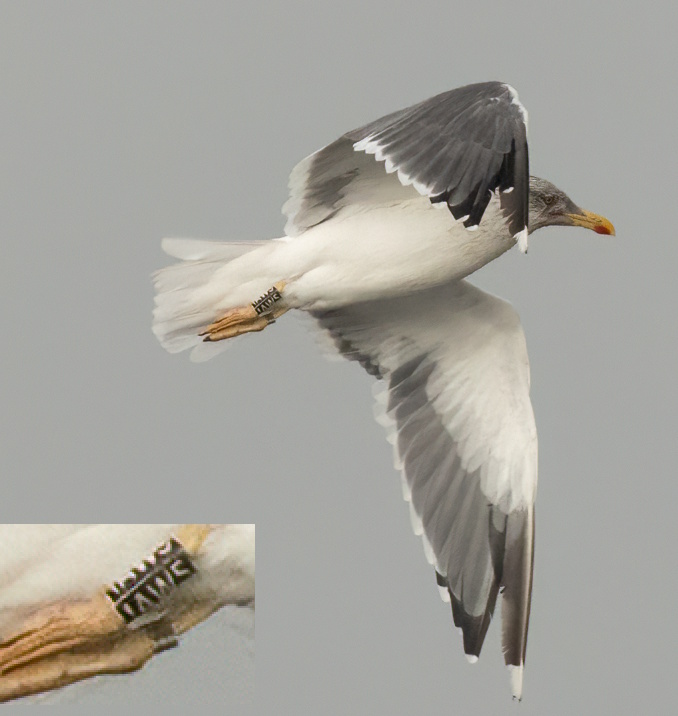
Black (IAW5)
Ringed at Chouet Landfill Site, Guernsey, in 23/05/2013 as a 2nd year
bird.
Recorded at Burton Mere Wetlands on 04/04/2025 and 31/10/2025.
A long time between ringing and the first record. It
was likely to have been passing through Guernsey as a young bird in
2013, probably having spent the winter in Portugal and/or Spain as many
gulls do. Perhaps, here on the Dee Estuary, it is a local roof top
breeding gull as many do these
days - including at Connah's Quay and Birkenhead which are both close
to BMW. See Andy Harmer's article Up on
the Roof - June 2023 Newsletter.
Oystercatchers
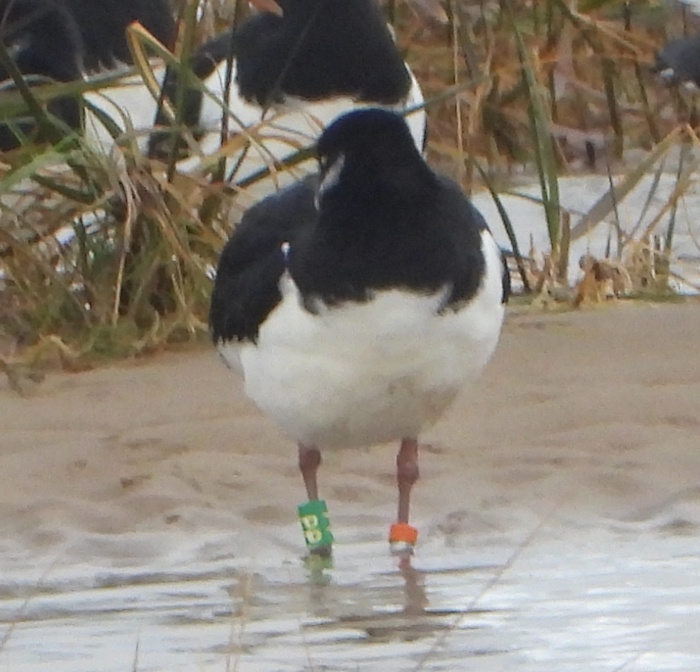
O - G(PP)
Ringed at Llanrhystud, near Aberyswyth, on 23/02/2023 as 1st
winter bird.
Recorded at Leasowe on 24/06/2024 and at Hoylake on 07/11/2025.
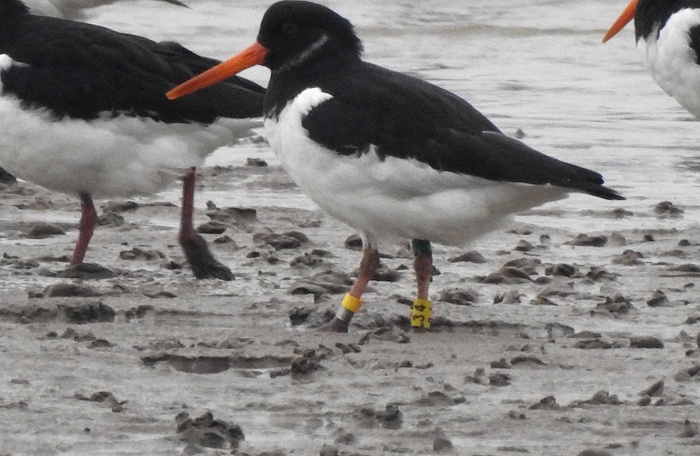
Y - G/Y(34)
Ringed in Dublin Bay on 25/01/2020.
Seen at Newbiggin by Sea, Northumberland on 29/07/2021.
Recorded at Thurstaston on 11/11/2025.
Perhaps this one breeds in the north-east of England
and was on its way to Ireland to spend the winter when it was spotted
at Thurstaston.
Shelducks
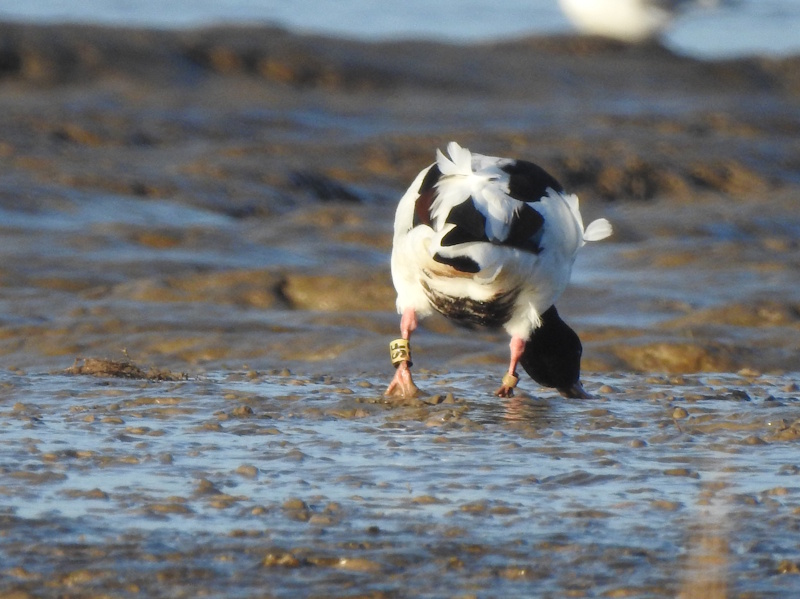
Lime (SF)
Ringed at Martin Mere onn 18/03/2019.
Seen regularly at Martin Mere between June 2019 and March 2025,
recorded 53 times.
Recorded at Thurstaston on 10/11/2025.
Metal ring no.
GN44377
The problem with metal rings is that, once fitted, to be able read the
ring you either have to re-trap the bird or find it dead - but very
occasionally somebody gets lucky enough to be close enough to a live
bird with a good camera and is able to photograph all the characters on
the ring. Tony Ormond was such a lucky man when he photographed this
one on Meols Shore, although being an experienced ringer, birder and
photographer probably helped!
Ringed at WWT Llanelli, Carmarthenshire (south
Wales) on 12/07/2008.
Ring read from photograph at Meols Shore on 06/11/2025.
Grey Plovers
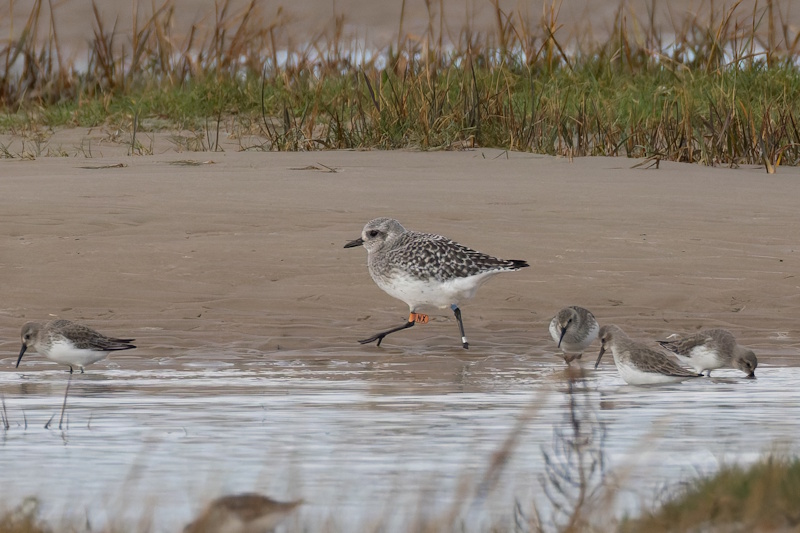
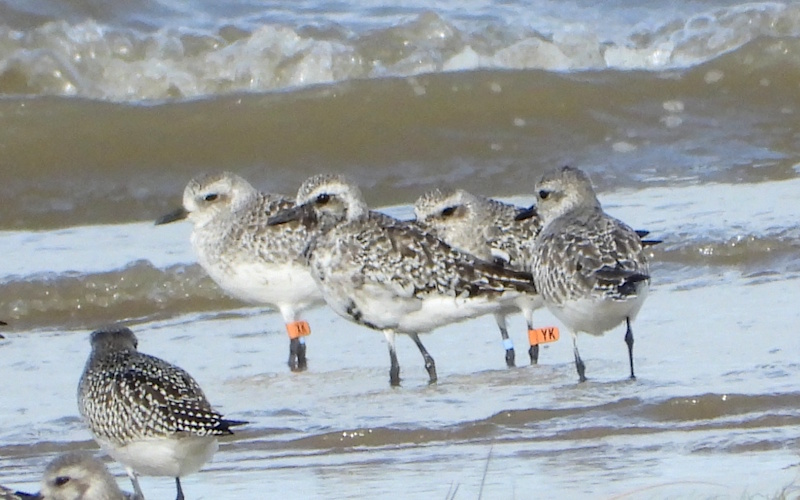
Over the past three months 25 orange flagged Grey
Plovers have been recorded a total of 44 times, mostly at high tide at
Hoylake with a few also at low tide at Meols. There have been several
catches of Grey Plovers locally, at Formby and Ainsdale, since 2018.
The records show that these birds range throughout the Sefton coast,
North Wirral and Dee Estuary area.
Knots
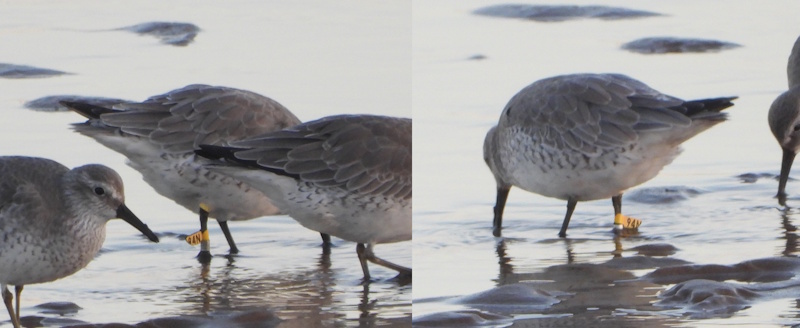
Ringed in May 2017 the flag has become quite worn, but still readable specially if both sides are seen.
Yflag (94N)
Ringed in SW Iceland in May 2017.
It has been seen most winters since at Meols, Thurstaston and West
Kirby, but only once at Formby - in December 2018. It has also been
recorded on passage in SW Iceland in May 2018, 2023 and 2024.
November 2025 saw it at both Meols and Thurstaston.
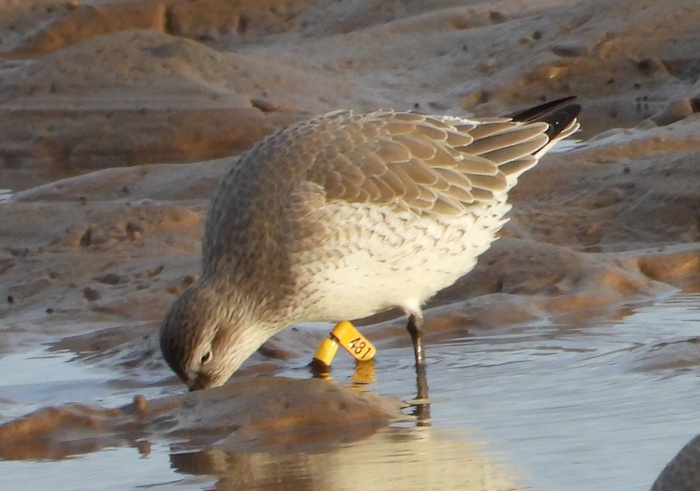
Yflag (481)
Ringed in SW Iceland in May 2025.
Recorded at Meols and Hoylake in November 2025.
One of over 500 caught and ringed in Iceland in May 2025 - we've already seen ten of these newly flagged Knots here on the Dee this winter.
Colour Rings were recorded by Richard
Smith, Stephen
Hinde, Tony Ormond, Mike Pollard, Joe Downing, Steve Williams, Sean
O'Hara and Julia Mottishaw.
Richard Smith
November Bird News
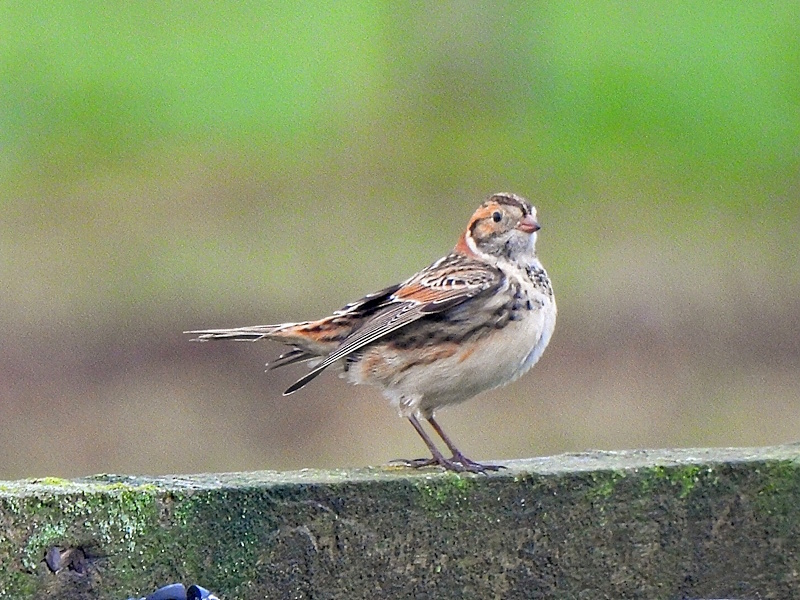
I'm not sure whether we had one, two, three or even four Lapland Buntings this month - but always a cracking sprecies to see. Most likely the one seen at Gronant on the same day as one at Hoylake, both on the 7th, were two different birds. On the 9th one was at Hilbre but seen to be flying towards Red Rocks, and one then took up residence in one of the coastal paddocks by Leasowe Lighthouse where it gave some good views until the 17th. The first Snow Bunting of the winter also turned up on the 7th, at Gronant, with three on the sea defence at Leasowe on the 12th. Two were present there over the next few days but by the 21st five were at Gronant with five also at Point of Ayr on the 24th.
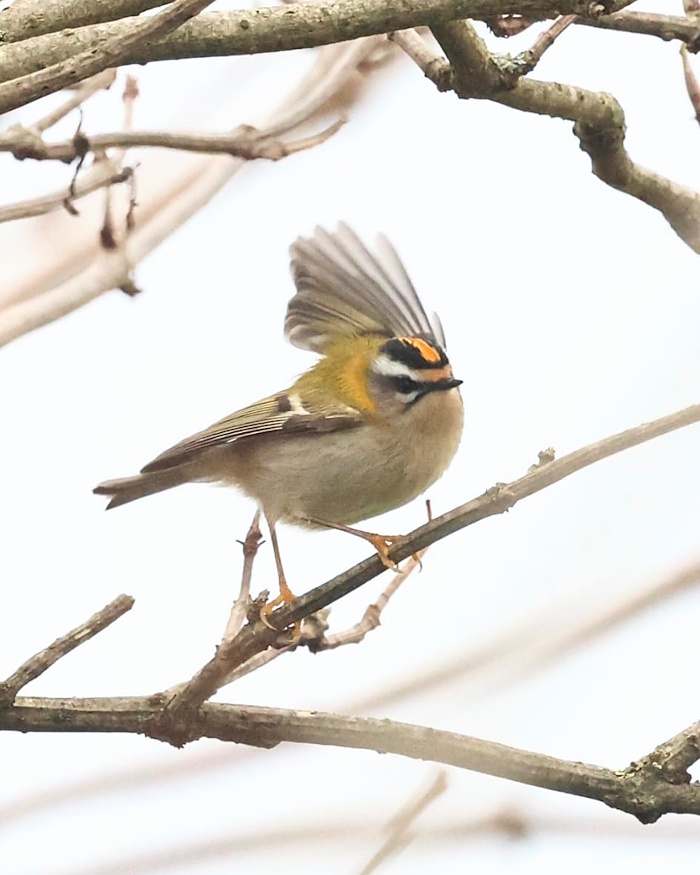
It's not been a good autumn for Yellow-browed Warblers but one was in trees near Leasowe Lighthouse from the 2nd to 10th. In contrast it's been a very good autumn for Firescrests, as well as a remarkable six caught and ringed in a garden on Bidston Hill, there was also one on Hilbre on the 7th and one was close to where the Yellow-browed Warbler was found by Leasowe Lighthouse from the 2nd to the 13th.
On the marshes there were several double-figure reports of Marsh Harriers including at least 17 coming to roost at Neston Reedbed on the 17th. At least one ringtail and one grey male Hen Harrier were seen several times, and it was good to have reports of one or two Short-eared Owls at Point of Ayr, Parkgate, Neston and Burton, with a maximum of three at Parkgate on the 30th. In addition a Bittern was regular at Parkgate and a Glossy Ibis was recorded out on Burton Marsh several times.
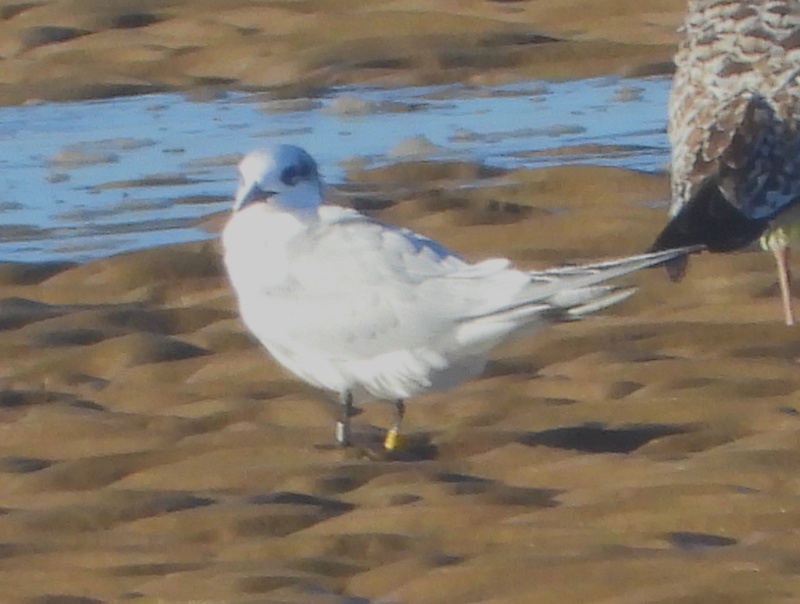
On the shore there was a very late Sandwich Tern at
Hoylake on the 8th, it had a yellow flag which meant it was ringed in
Poland, although we were unable to read the inscription. The following
day, the 9th, there was a nice high count of 21,500 Knots at West
Kirby.
What to expect in December
By December we should get a good idea if it's going to be a good Waxwing winter or not. The last one was in 2023/24, that winter it started slowly then we ended up with several hundred - fantastic!
The Christmases I remember are the ones where it's cold, crisp with no wind when it's great to be out and about by the estuary. Wader numbers are at their peak and there should be Hen and Marsh Harriers to be seen over the marshes, we haven't seen many Short-eared Owls lately but we can get them in double figures flying over the marshes by Denhll Quay, and Pink-footed Geese will be everywhere, at the end of December they often start to feed in the fields between Hoylake/Meols and Greasby and consequently we often see them fly over my house in Caldy at first light.
Sea-watching on calm days can bring it's rewards
with good numbers of Common Scoters and Great Crested Grebes in view,
as well as a few Long-tailed Ducks, Velvet Scoters and Red-throated
Divers with always the possibilty of something rarer.
December Highest
Tides:
5th 10.48hrs (GMT) 9.6m
6th 11.36hrs (GMT) 9.6m
7th 12.25hrs (GMT) 9.6m