Dee Estuary Birding
Monthly Newsletter...
October 2026
Newsletter

A Leach's September
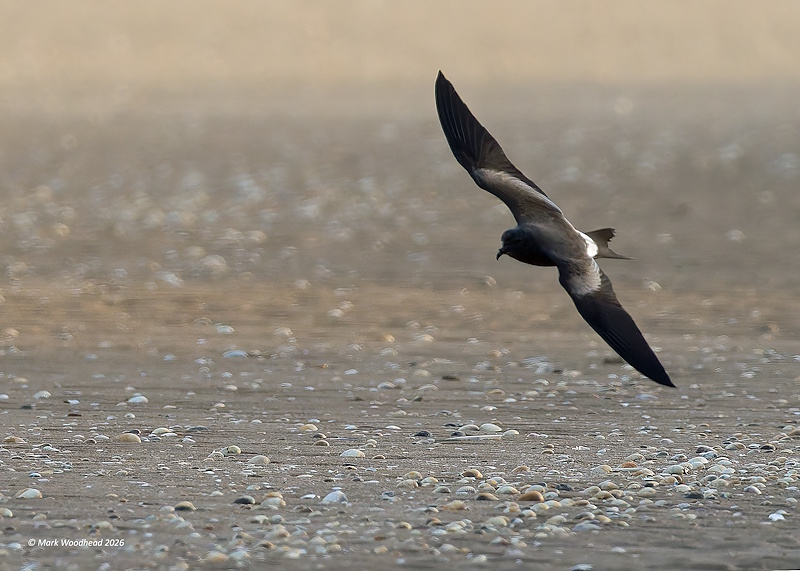
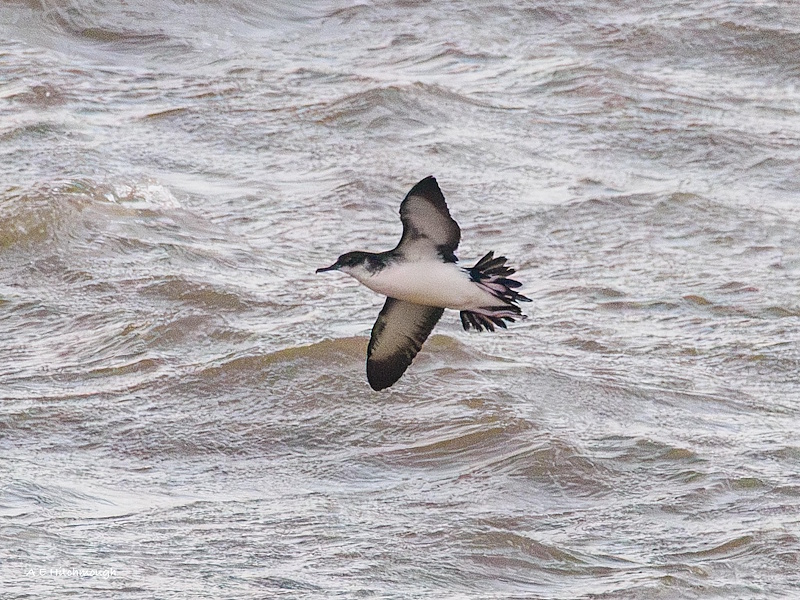
"With the sea-watching weather continuing it was an early start for three members (one who had stayed over and the others joined before dawn). Unlike on many previous occasions ... they would not be disappointed as today was an outstanding day." Extract from Hilbre Bird Observatory Blog for 20/09/2026.
It was indeed an outstanding day with at least 131
Leach's Petrels counted from Hilbre, the highest daily total since a
remarkable 524 on September 17th 2010. Although the 20th was easily the
best day of the month we had a total of nine days when Leach's Petrels
were
sighted, which is an excellent total (compared to only seven days in
2010). The
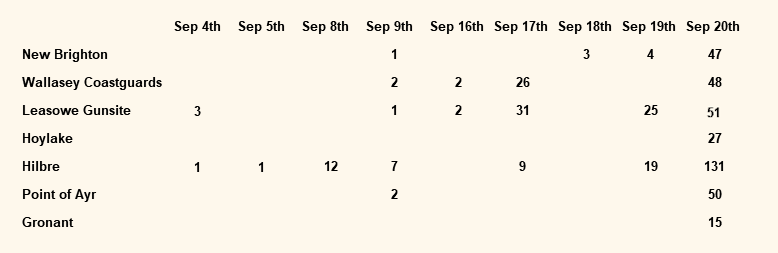
table below shows a breakdown of numbers at each site, birds were
mostly moving from east to west along the coast so many would have been
seen at more than one location. Note also that not all sites were
manned all day so totals depend very much on observer effort. For
example, there was a period of at least four hours when nobody was on
Hilbre on the 20th, so our guestimate is that at least another 40 would
have
flown past unseen.
A force 6 westerly brought in a few on the 4th, quite early in the month for Leach's Petrels to be recorded, but large numbers were already out in the Atlantic with a count of 152 at the Bridges of Ross on the west coast of Ireland on the same date - the second highest count this century for that site. The next westerly was a force 6 on the 8th and with it came our first double-figure count with 12 at Hilbre. There was still a force 5 the following day, and, although we were only getting single-figure counts here, just 25 miles further west at Rhos Point, 40 were counted early morning.
The wind dropped for a week but from the 16th to the
20th we had a strong and persistent westerly air flow with Leach's
Petrels recorded every day. The strongest winds were during the night
of the 19th/20th, by 11pm the average wind speed had increased to 25
knots and by 2am it was 27 knots, with gusts up to 33 knots, a westerly
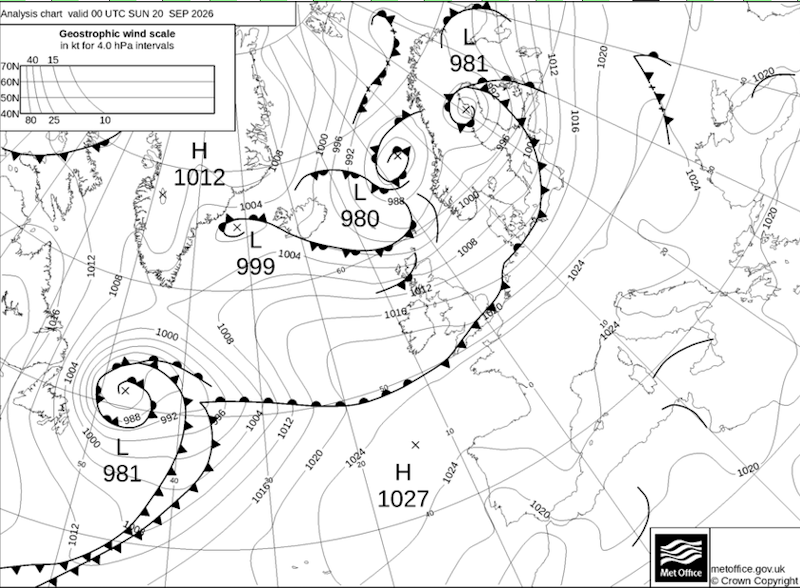
near gale. The synoptic weather map shows the succession of low
pressure systems coming across the North Atlantic that night.
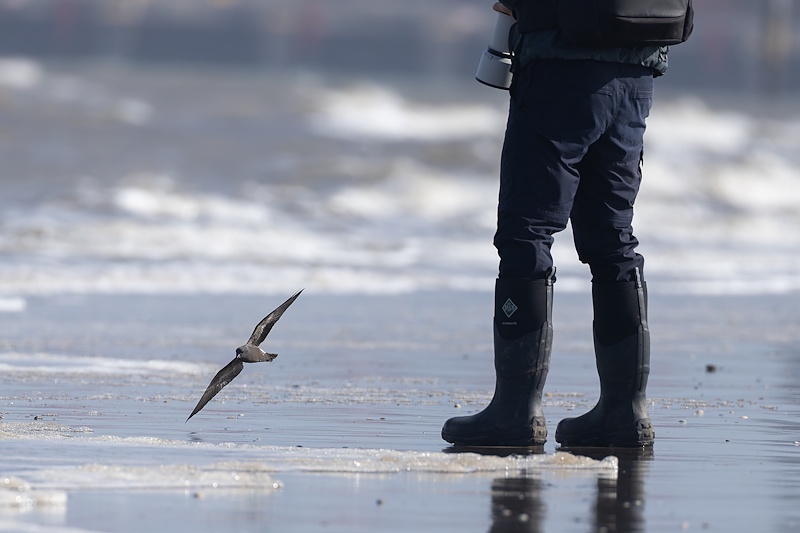
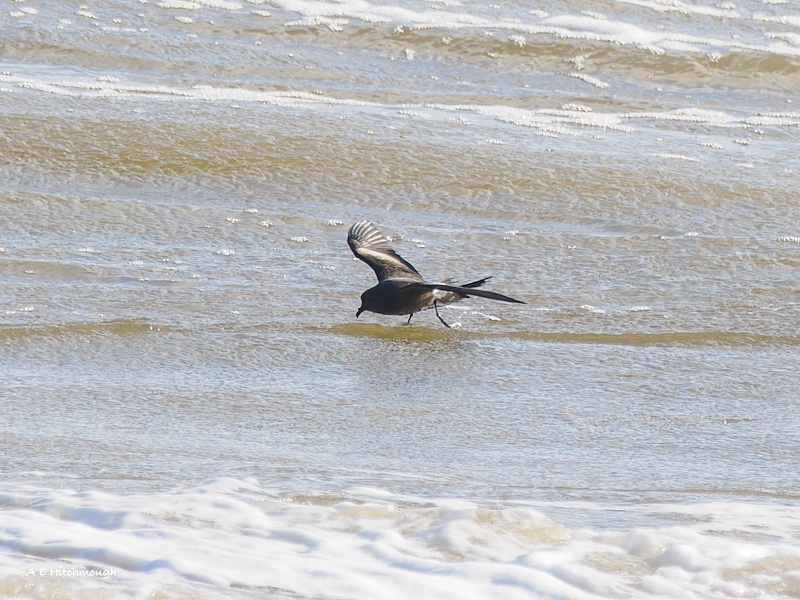
It's just fantastic to see a good Leach's Petrel
passage like the one on Sunday 20th with Leach's Petrels flying past
one after another throughout the day - and Alan Hitchmough's video
gives an indication of what it was like (Hilbre, September 20th).
After the strong overnight winds Leach's Petrels
were coming past in good numbers from first light with the passage
dropping off later in the morning as the wind eased. But there were
still plenty of birds present and Leach's Petrel were reported moving
in both directions from Hoylake through the afternoon, while 50 were
recorded at Point of Ayr between 4pm and 5pm. A further 19 passed
Hilbre between 5pm and 7pm. So it seems that some of the birds had
remained within Liverpool Bay during the day before moving west on the
evening flood tide by which time the wind was no more than a moderate
breeze.
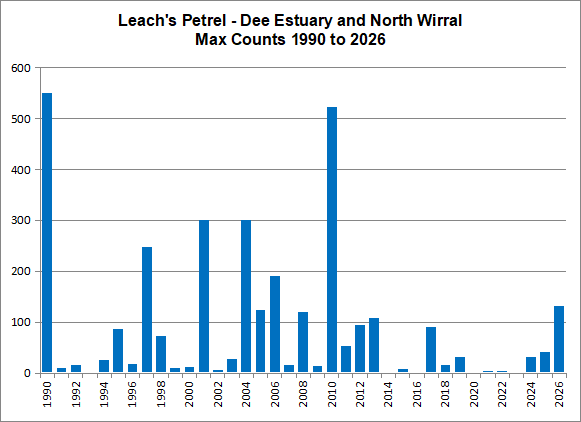
The bar chart shows the annual max counts from 1990 to 2026, and you can see we were well overdue for a good passage. From 2011 to 2025 we've only had one year with a count of over 100, that was back in 2013. Contrast that with the previous thirteen years when there were seven years with counts over 100, over half, and these included one of the best ever years in 2010. Lets hope we are in for some more fantastic days in the coming years.
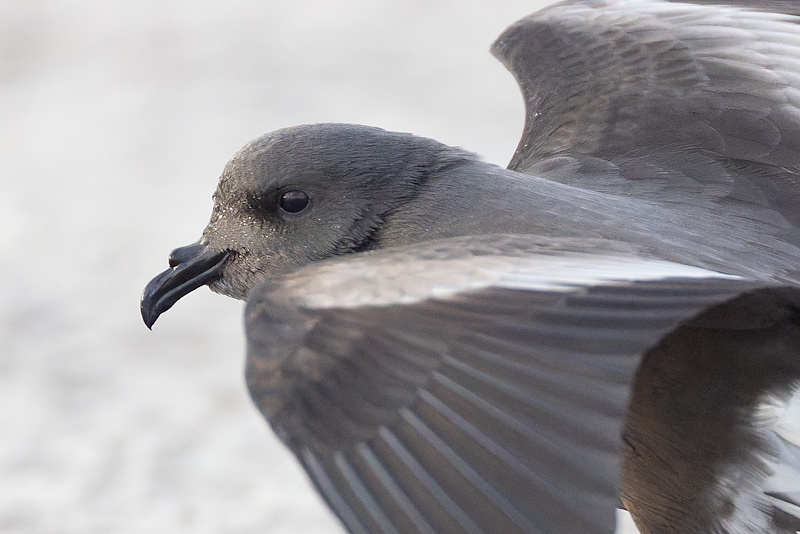
I was away during the
crucial period between September 16th and 20th so I've had to rely
wholly on other peoples counts, for which many thanks. As well as those
conveyed directly to me I've used records from our local WhatsApp
groups, the Hilbre Bird Observatory Blog and BirdGuides. In particular
I want to thank those who have sent me some wonderful and amazing
photographs!
Richard Smith
Colour Ring Report
Turnstones
It was a good month for ringed Turnstones, the birds by West Kirby Marine Lake were particularly confiding and that meant they were close enough for metal rings to be read without having to catch the birds. But the best photo was one taken at New Brighton, details below.
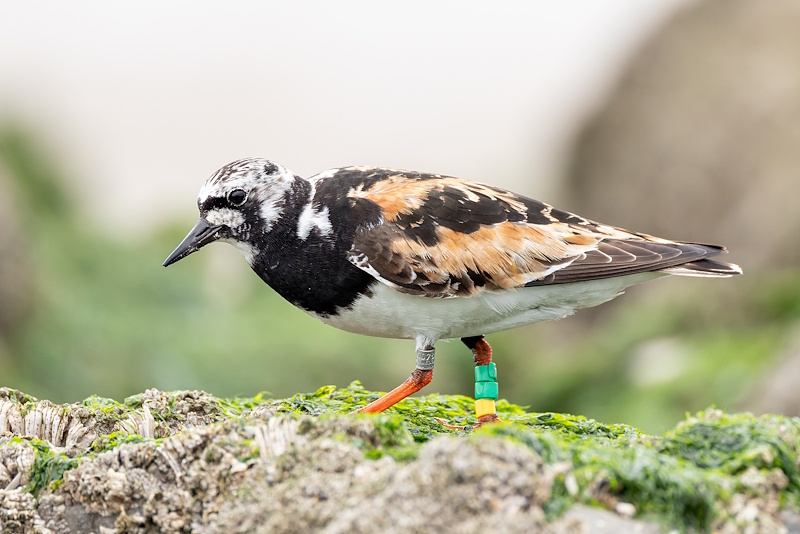
N/GGY
Ringed at Punta Belea, Cangas, Pontevedra in north-west Spain, in June
2024, as a 2cy
bird.
Recorded at New Brighton on 03/09/2026.
Ringed by the Andurina Ringing Group as part of their 'Shorebirds Monitoring Program' in Galicia. We've seen Black-tailed Godwits, Dunlins and a Ringed Plover ringed by this group in the past but this is our first Turnstone.
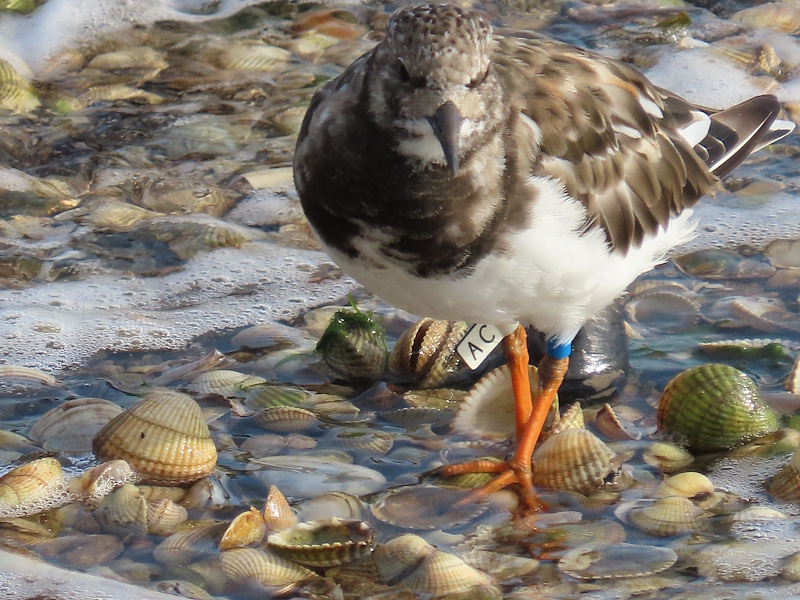
Blue - White Flag (AC)
Ringed at Hilbre on 19/03/2025
Recorded by West Kirby Marine Lake on 12/09/2026 and 13/09/2026.
You may think it's not travelled very far since it
was ringed, but, of course, it will have been all the way to the Arctic
and back to breed! This is a new scheme putting flags on Turnstones at
Hilbre, so far just four have been caught and ringed. Hopefully we'll
see a few more of them in the near future.
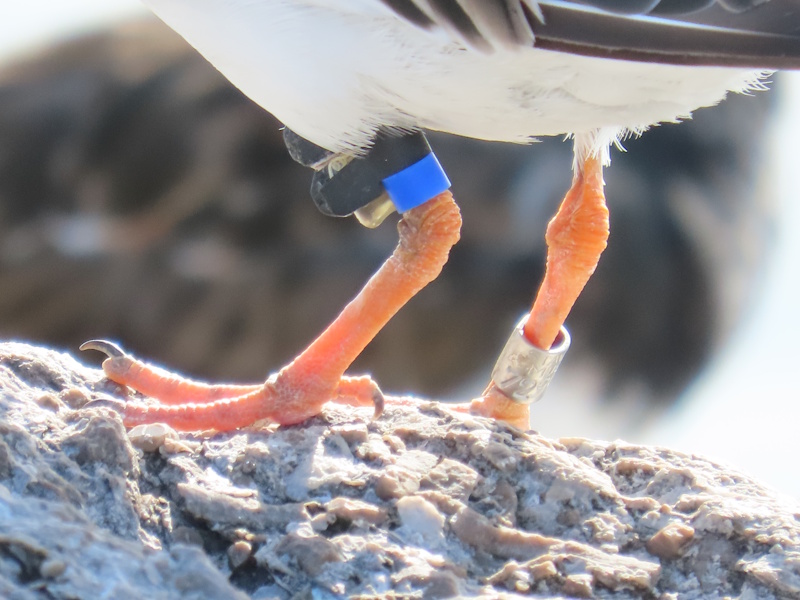
Black flag/Blue and data logger
Metal ring 7294183
Ringed at Vardo, Finmark, on the extreme north-east tip of Norway, on
25/06/2023.
Recorded at West Kirby Marine Lake in October 2023 and several dates in
September 2026.
Roosting close to the pathway around West Kirby
Marine Lake we were able to get good enough photos to be able to read
the metal ring in 2023. Rings on the tibia can be very difficult to see
when
Turnstones are roosting (hidden in their feathers) and we didn't see
any colour rings/flags until John Shaugnessy managed to get the photo
above this September. The data logger was fitted at the same time as
the metal ring was put on, with colour ring and flag there to support
the weight so it wouldn't dig into the bird's leg.
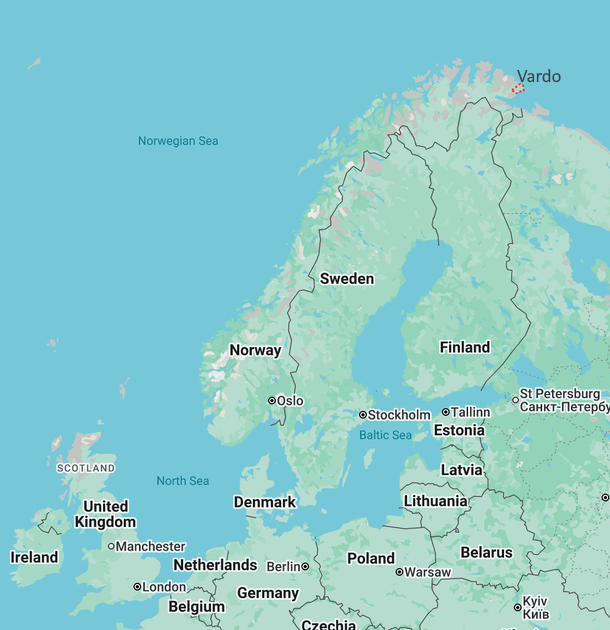
The map above shows the ringing location (Vardo) up
in the north-east corner of Norway. I show it because I was surprised
to find that far corner of the country was further east than St
Petersburg, Kyiv and Istanbul! It's also well inside the Arctic Circle.
Metal Ring AT 254613
Another metal ring read from photographs.
Ringed on the Island of Sappi, NW of Luvia, Finland, in August 2020 as
a juvenile. Caught in a walk-in trap.
Recorded on the rocks by West Kirby Marine Lake in October 2022,
October 2023, September 2025 and September 2026.
Redshanks
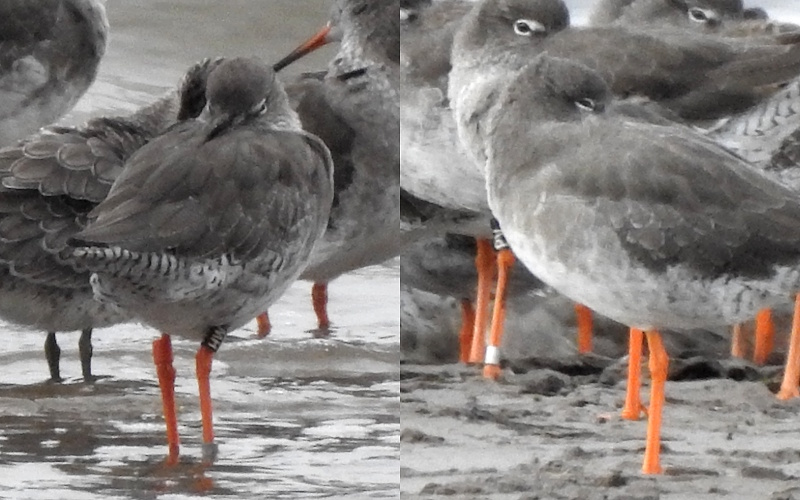
We recorded four Redshanks ringed by the Mid-Wales
Ringing Group in September, all ringed at Ynyslas by the entrance to
the Dyfi Estuary. We are still waiting for feedback for one of them,
but here are the details for the other three.
Black (HW)
Ringed at Ynyslas on 24/01/2019.
Recorded at Heswall on several dates in August 2022 and September 2025,
and 25/09/2026
Black (PV)
Ringed at Ynyslas 02/08/2019.
Recorded at Heswall in September 2025 and 2026..
Black (AEP)
Ringed at Ynyslas on 25/01/2020.
Recorded at Oakenholt RSPB on 15/08/2022, and at Heswall in September
2024, 2025 and 2026.
Cormorant
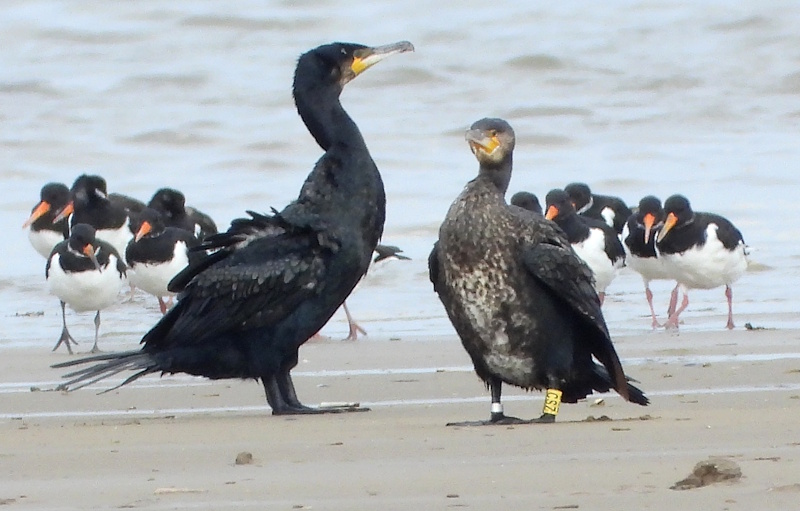
Yellow (CSZ)
Ringed at Attenborough Gravel Pits, Notts, in May 2025 as a chick.
It's been seen more that 10 times around the Mersey estuary this year
(2026),
including Seaforth, Hoylake, Crosby and Hale Duck Decoy.
Recorded at Hoylake on 10/09/2026.
Little Egret
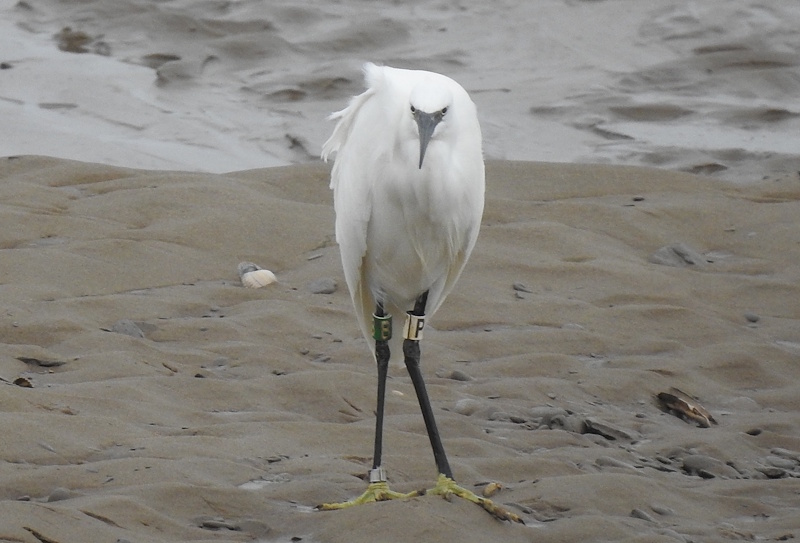
White
(P) - Green (B)
Ringed at Hale Duck Decoy in July 2025 as a chick.
Recorded at Parkgate in August 2025 and at Leasowe on 18/09/2026.
Shelduck
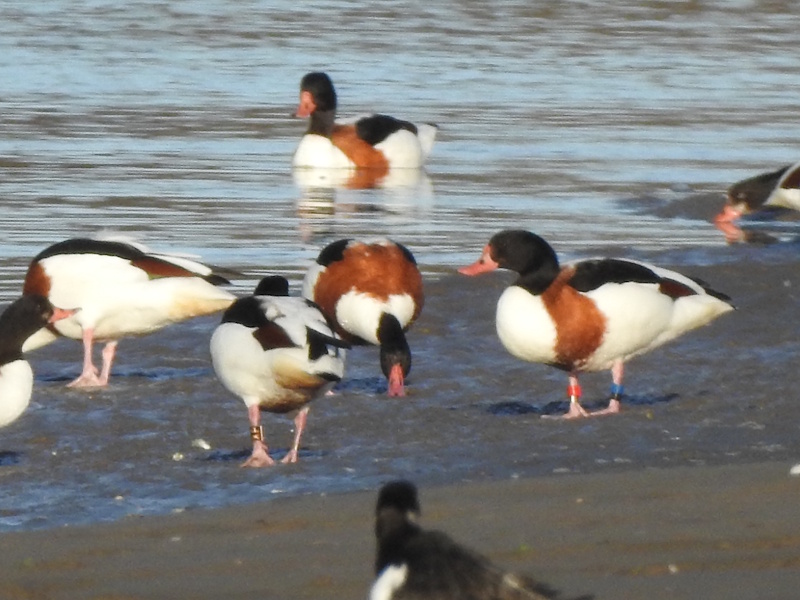
This is the first time either of these Shelducks have been recorded
since being ringed, but there is quite a contrast with both the date
and ringing location between these two birds.
Black (XP)
Ringed at Lower Derwent Valley NNR, Yorkshire, in February 2015.
Recorded on Thurstaston Shore on 01/09/2026.
BN - R (blue over
black - red)
Ringed on Longton Marsh, Ribble Estuary, in March 2026.
Recorded on Thurstaston Shore on 01/09/2026.
We believe this one is part of a study to find out
where the Shelduck go when they are disturbed by wildfowlers and how
quickly they return to Longton Marsh.
Black-headed Gull
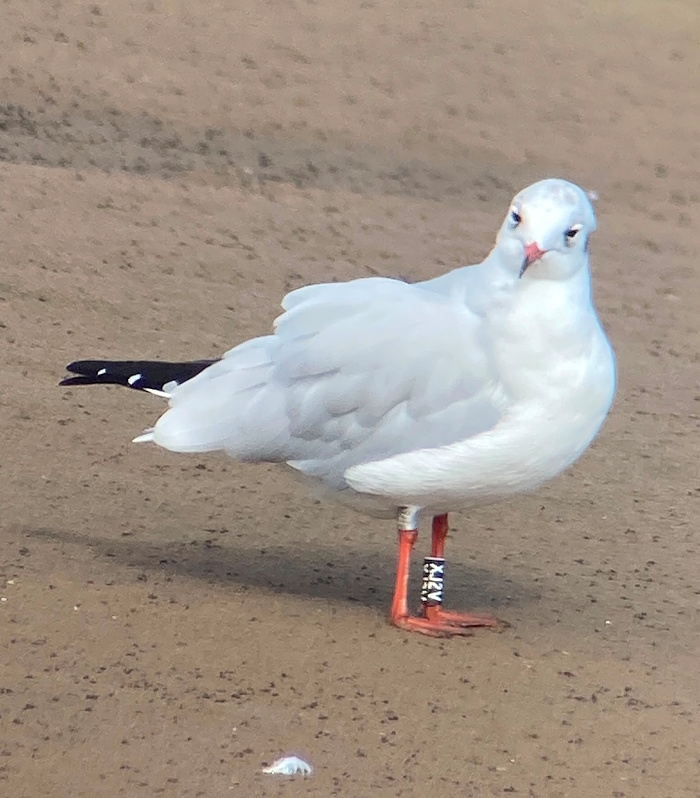
Black (XJ2V)
Ringed at Altfriedland (near Polish border east of
Berlin), Germany, in June 2024 as a chick.
Recorded at Ogston Reservoir in January 2026 then at Wagejot Nature
Reserve on Texel Island, Netherlands, in mid-June.
It was on Meols Shore in July and August 2026.
Most Black-headed Gulls start breeding when two
years old so it seems likely it bred on Texel this year, well away from
where it was hatched in east Germany.
Colour Rings were recorded by Richard
Smith, Stephen
Hinde, Tony Ormond, Sean O'Hara, Steve Williams, Richard
Speechley, Alan Hitchmough, Paul Ralston, John Shaughnessy and David
Thompson,
Richard Smith
September Bird News
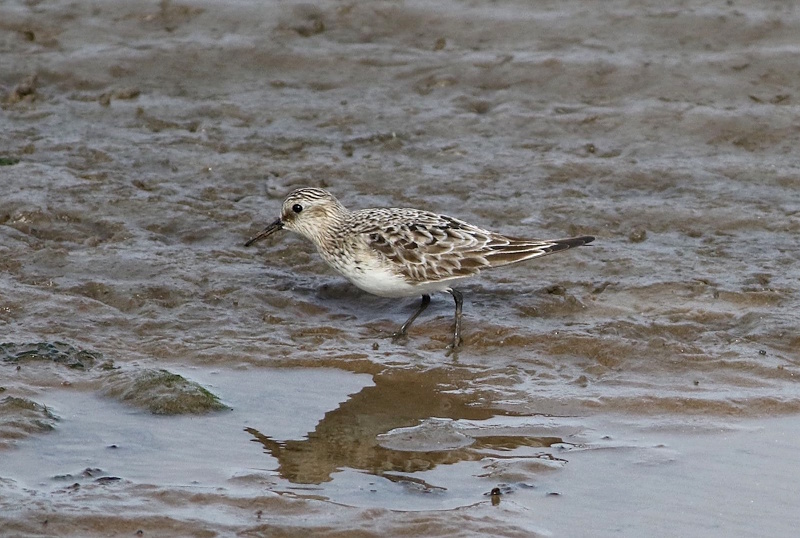
The month started like the beginning of August, with
another rare wader found by Sean O'Hara. An adult Baird's Sandpiper, It
was only present for one day (3rd) but gave fantastic views close to
the prom at Meols as the photos show. A Little Stint was also there at
the same time with three reportd from Hoylake later in the day.
Another rare wader was a Temminck's Stint which was
at
Gronant on the 28th, but I don't have any details of this sighting.
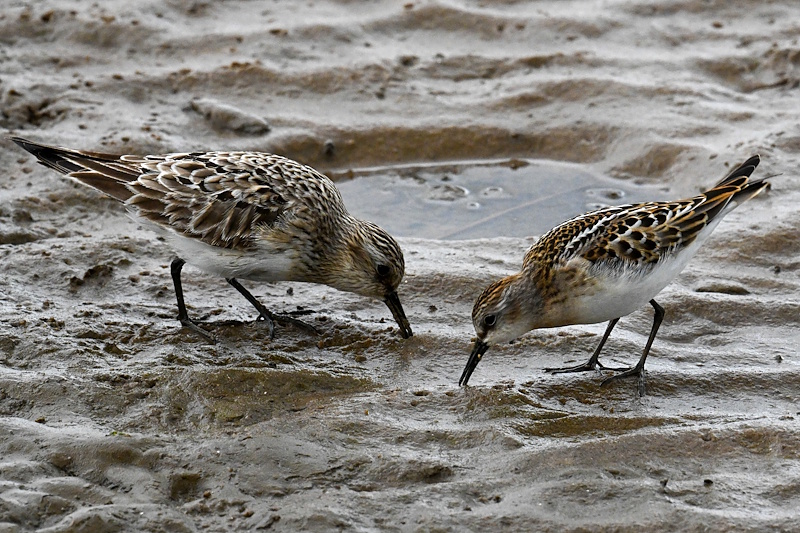
The first juvenile Curlew Sandpipers started coming
through at the end of August and the passage continued all through
September, but
with only small numbers at any one time. The total number of records
(i.e. sum of daily sightings) came to 57, compared to 197 last year.
Southerly and easterly winds towards the end of the month resulted in
more Curlew Sandpipers including six at Flint on the 27th and eight
there on the 30th. For the second year running no Curlew Sandpipers
were reported from Burton Mere Wetlands.
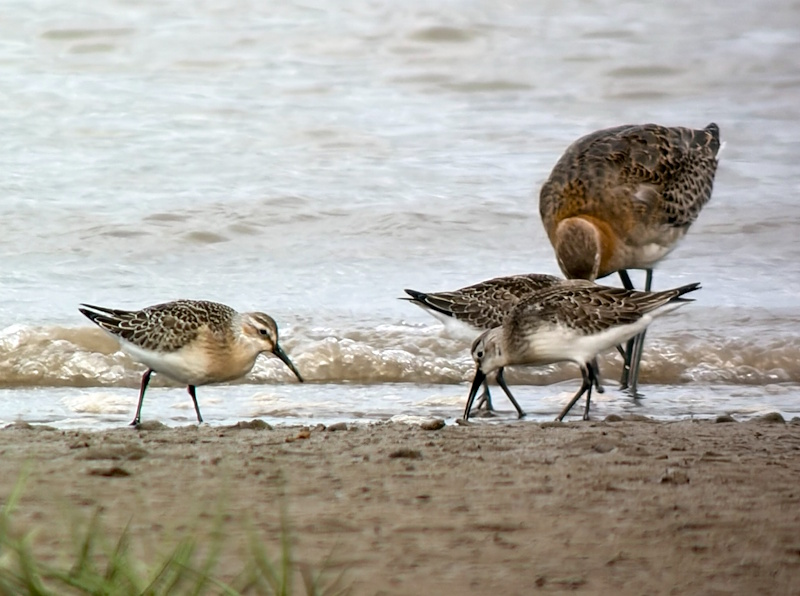
The Greenshank passage continued with the
highest counts being 17 at Heswall on the 3rd and 44 at Parkgate on the
26th. 6,050 Black-tailed Godwits at Caldy Wildfowl collection was a
nice high count for September.
The very good Leach's Petrel passage has already been described in the above article, but they certainly weren't the only seabirds of note this month. In fact, the star bird must surely be the Barolo Shearwater, which gave a tantalisingly brief appearance off Leasowe Gunsite on the 17th. It was identified by an experienced birder familiar with the species, and the record has been submitted to BBRC, so let's hope it is accepted.
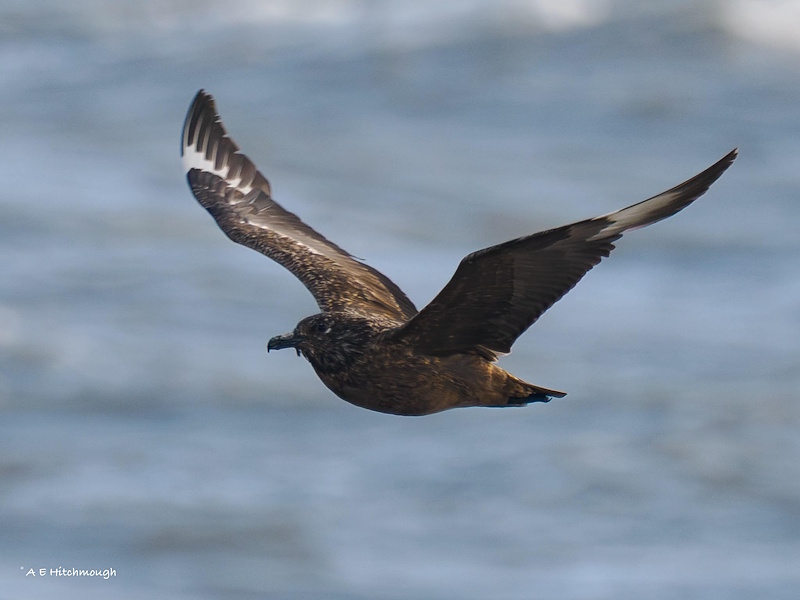
A Sabine's Gull turned up on Hoylake shore on the 15th and it was good to see some skuas during the windy weather. Five Arctic Skuas were counted from Wallasey on the 17th with another five from Hilbre on the 20th, two over Little Eye on the 9th gave really good views. A Great Skua flew past Hilbre on the 20th, and on the same day an adult Pomarine Skua was spotted off Leasowe Gunsite. Earlier, on the 3rd, a juvenile Pomarine Skua was off Hoylake. One Grey Phalarope flew past Wallasey on the 16th with two along North Wirral the following day.
On a breezy day right at the start of the windy
weather there was a good passage of terns on the 15th with 700 Sandwich
Terns, 6 Arctic Terns and two Black Terns counted from Hilbre. Later in
the month a juvenile Black Guillemot was recorded several times near
Hilbre.
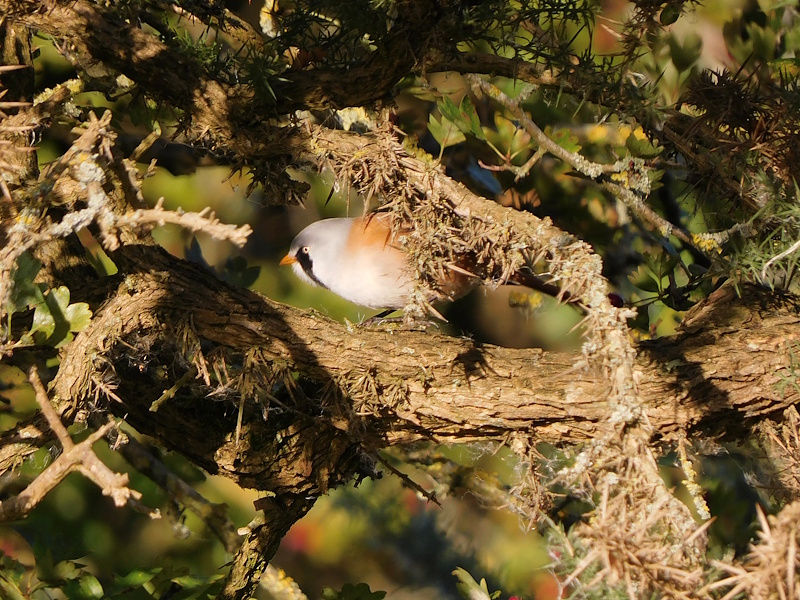
Elsewhere, Spoonbills peaked at 20 at Parkgate after which they seemed to disappear. Three Bearded Tits were on the edge of Neston Reedbed on the 15th with one or two spotted in the same area over the next few days.
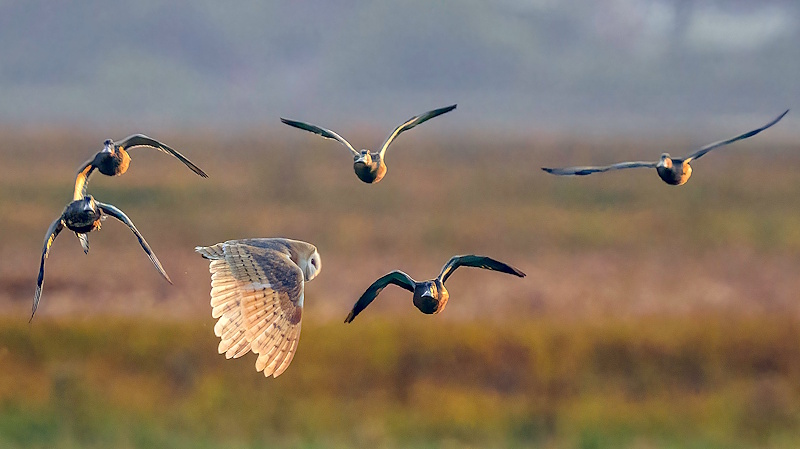
Barn Owls were recorded regularly on the
marshes, and Shovelers returned in good numbers with 82 at Parkgate on
the 26th. Nice photo of both below by Jeff Cohen!
What to expect in October
We can expect lots of movement in October. Gales,
particularly early in
the month, can still bring in good numbers of Leach's Petrels as well
as skuas and other good sea birds. Given the right conditions, an
overcast morning with south-east winds is ideal, this month should
bring
good visible migration (Vis Mig) along the coast, I'm sure most of you
will
remember the massive Redwing movement of 2022 (see 'A
Massive Redwing
Migration').
Our over-wintering waders will be arriving, and
expect to see large flocks of at least 10,000 Dunlin arriving from the
east. A lot of Pink-footed Geese have already arrived here but a lot
more will fly in during October, many may well continue on to North
Norfolk
before returning to the Dee marshes later in the winter. Whooper Swans
will also be a
welcome winter visitor.
Hen Harriers and Short-eared Owls will be seen over the marshes, and we often get a big influx of Cattle Egrets at Burton in the autumn.
Rarities should include a few Yellow-browed
Warblers, also a Slavonian Grebe is a possibility.
October Highest
Tides (Liverpool Gladstone Dock):
27th 11.21hrs (GMT) 9.6m
28th 12.01hrs (GMT) 9.6m