Dee Estuary Birding
Monthly Newsletter...
February 2026
Newsletter
Species Spotlight - Black Redstart

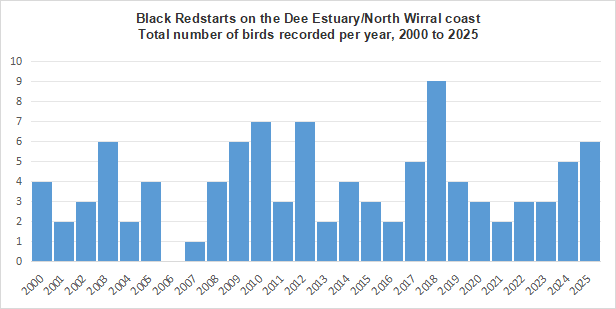
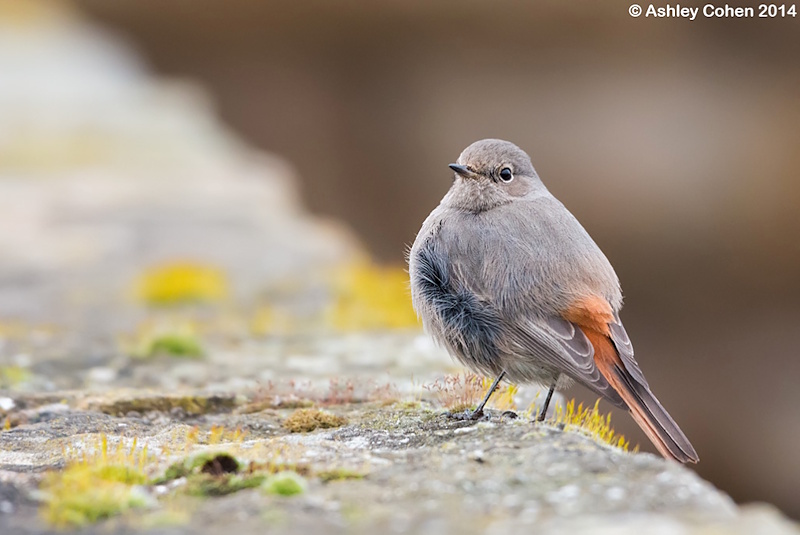
2025 was a good year for Black Redstarts, in January and early February
we had a very showy male over-wintering at New Brighton which spent
much time on the walls of Fort Perch posing for photos. We
also had at least one over-wintering female at Hoylake and Meols at the
end of the year but this one was far more elusive and was only recorded
on six days in December. In between we had spring migrants at Hilbre
and Leasowe and an autumn migrant at Hoylake. Since the beginning of
the century we've had an average of just under four birds a year in the
Dee Estuary/North Wirral area, with just one blank year, in 2006.
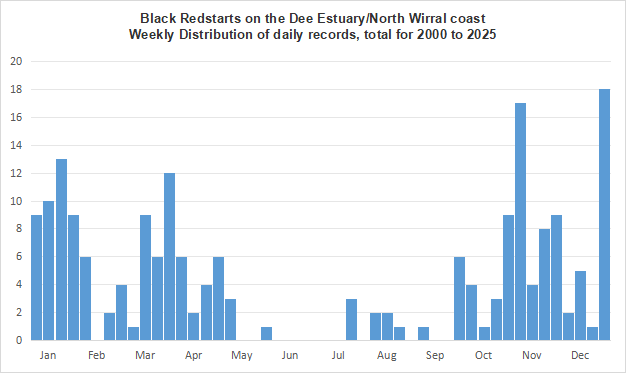
The next graph is the sum of all daily records, split into weeks, since the start of the century. You can see that despite the accumuation of 26 years of records these totals are still small, illustrating this species' rarity. But their liking for man made structures (walls, buildings etc.) means that when one is found they are easy enough to see and, more often that not, they will stay in the same area for a day or two and sometimes much longer.
The weekly distribution shows good numbers at the
beginning and end of the year due to over-wintering birds. For example,
one at Shotwick Boating Lake atayed from January 1st to 21st in 2019
and the New Brighton bird, already mentioned, was first seen on January
9th then every day from January 17th to February 5th in 2025. 2008,
2009 and 2018 all saw birds staying for five days in December with the
garden of Red Rocks Nursing Home being a favourite location in 2008.
The spring migration can be seen peaking in March
and the autumn migration in October and November, with most records of
birds staying just one day, as you would expect for migrants. The small
number of records in July and August are all of birds described as
either juveniles or 'female type' (i.e. either females or juveniles)
and it seems very likely these are all young birds dispersing away from
their breeding areas. This ties in with what BWP (Ref 1) says with
juveniles being the first to leave the breeding grounds in July and
August and in all directions - so these birds could have come from
anywhere within the UK or the near continent.
Breeding
Most of you will know the history of breeding Black
Redstarts in this country when they started to breed in bombed out
buildings in London after WW2. Since then numbers reached around 100 to
120 pairs in the UK in the 1970s and 80s before declining to as little
as 30 pairs in the 2000s and consequently they were placed on the
Red-list in BoCC (Birds of Conservation Concern). But the good news is
that numbers have increased again and, according to the Rare Breeding
Birds Panel, the latest figures show
up to 80 pairs in 2021, 101 pairs in 2022 and 92 pairs in 2023 (Ref 2).
This improving picture means that they were upgraded to the Amber List
for BoCC in 2021 (Ref 3).
Given the large population on the continent it is a
bit of a surprise that they haven't colonised the UK in much bigger
numbers, but I recently read an interesting theory about this on the
BirdGuides website written by David Callahan, and I quote:
"There has been some
debate as to why Black Redstart maintains such a fragile toehold in
Britain, but it seems that our subspecies of European Robin may have
filled some of the appropriate ecological niches which it is otherwise
kept out of by competition with greater numbers of Black Redstarts on
the Continent." (Ref 4).
London remains the breeding stronghold in the UK with at least one third of pairs found in Greater London, but they do breed elsewhere, and have even bred in our area in the past. In 1974 a nest was found with eggs on Hilbre, but tragically it was vandalised before the eggs hatched. In 1984 a pair that had over-wintered at Point of Ayr Colliery remained to breed and reared two broods. Just outside our area a pair successfully bred at Birkenhead Docks in 1977. More recently a pair bred in a quarry in Denbighshire in 2013.
Status in Europe
Here, on the Irish Sea coast, we live on the extreme
western edge of the Black Redstart range, but on the European Continent
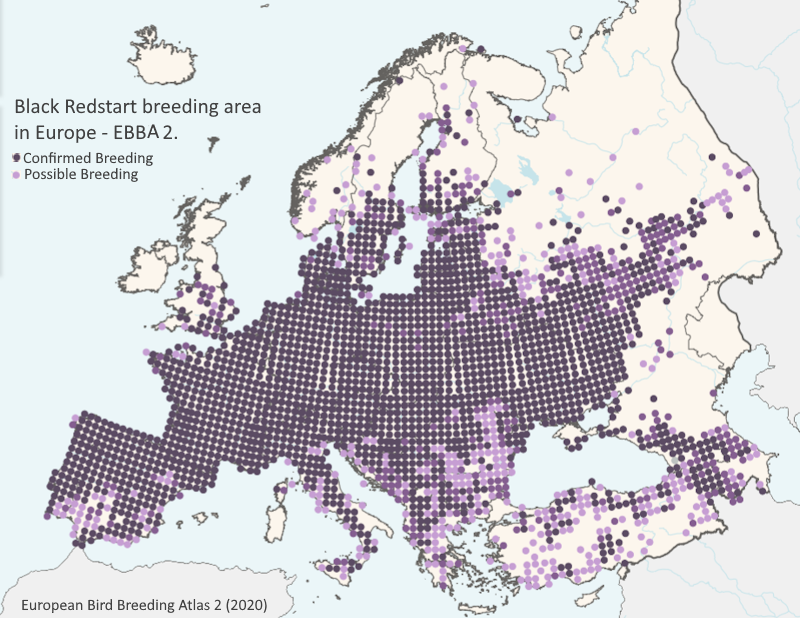
they are common and widespread. Birdlife.org (Ref 5) estimates between
5.7 to 10 million pairs in Europe, with around one million pairs in
Germany alone. I found these two freely available maps which neatly
illustrate the Black Redstart breeding area and their movments. See
Referances for links to these on-line maps.
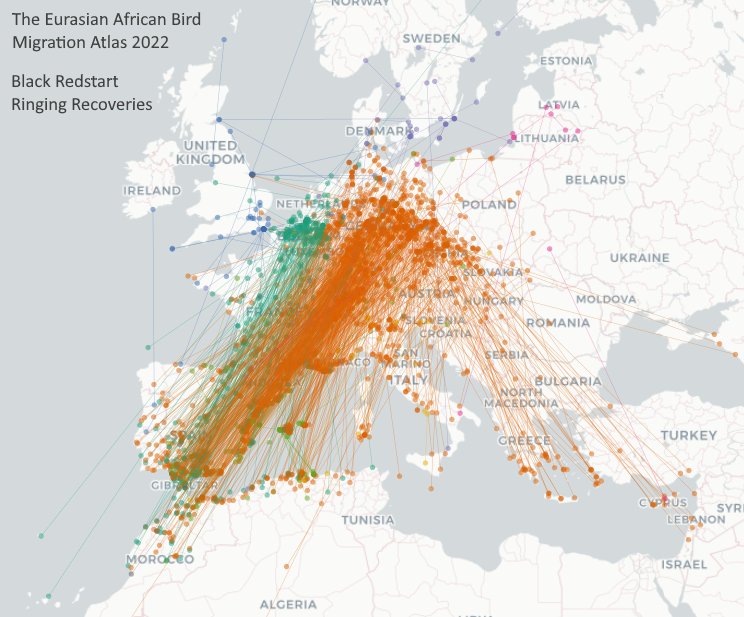
In the Migration Atlas map the different colours
just denote different areas. Black Redstarts in the northern half of
the map migrate south (mostly south-west as shown on the map) for the
winter where they join the sedentary population around the
Mediterranean, although many in the south do migrate from high up in
the mountains down to the local valleys in winter, i.e. altitudinal
migrants.
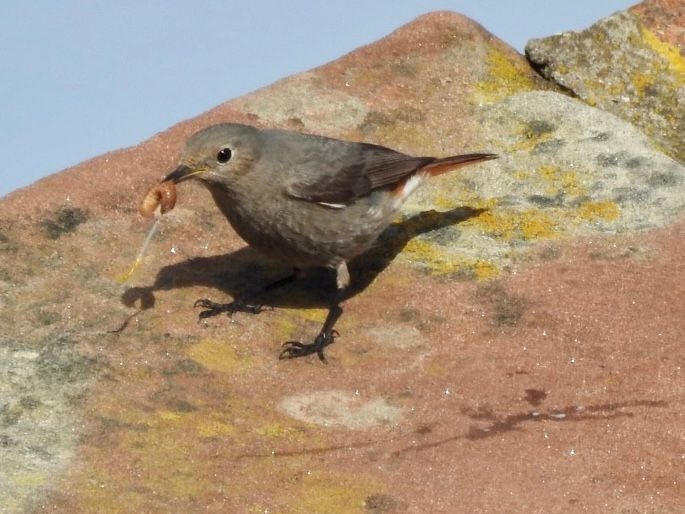
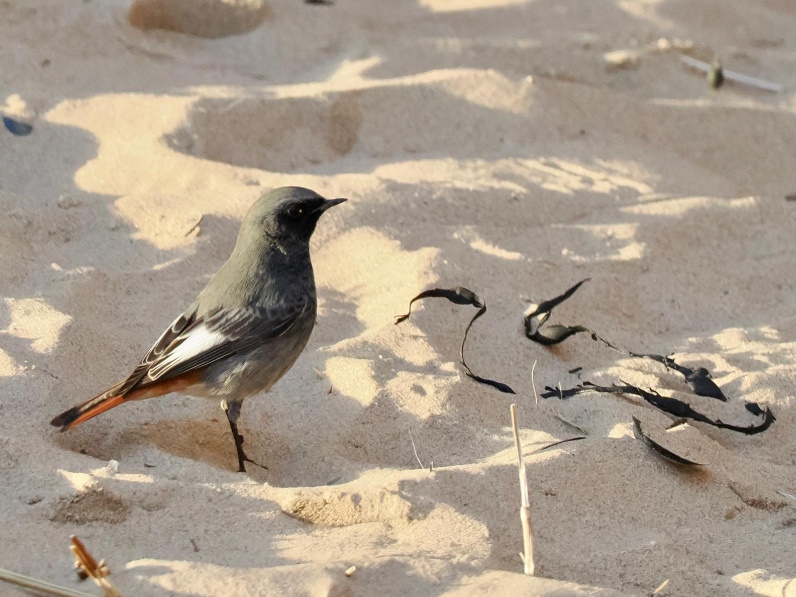
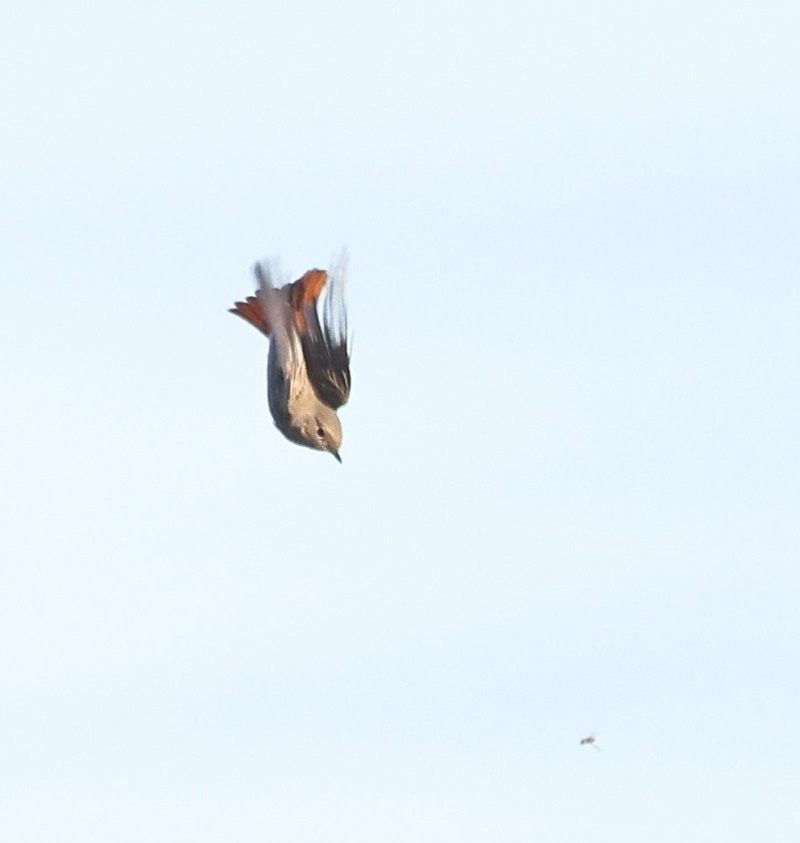
This one was having no problem finding food in March 2023 © Alan Hitchmough
References
1. Birds of the Western Palearctic Interactive - App
edition published by NatureGuides Ltd in 2023.
2. Rare Breeding Birds Panel, published reports
on-line, https://rbbp.org.uk/.
3. Stanbury, A. et al., The Status of Our Bird
Population (Fifth UK Birds of Conservation Concern Assessment), British
Birds 114:723-747).
4. David Callahan, Focus on: Black Redstart, BirdGuides, https://www.birdguides.com/articles/focus-on-black-redstart/, 2020.
5. BirdLife DataZone, https://datazone.birdlife.org/.
6. European Bird Breeding Atlas 2 (2020), The
European Bird Census Council (EBCC) on-line maps -
https://ebba2.info/maps/.
7. Spina, F. et al., The Eurasian African Bird
Migration Atlas, https://migrationatlas.org,
EURING/CMS 2022.
NOTE: Data for the Dee Estuary and North Wirral was
obtained from Cheshire & Wirral Bird Bird Reports and North-east
Wales/Clwyd
Bird Reports.
Richard Smith
Colour Ring Report
Black-headed Gulls
As, you can see from the photos below, our
Black-headed Gulls are already acquiring their breeding plumage and
those that breed to the east of us (mainly around the Baltic) will soon
be leaving. So it was good to see three ringed birds in one day in
January before they disappear. Colour ringing tells us that at least
two of these birds do indeed breed in the Baltic area, but we only have
non-breeding records for the third one. It's exciting that one of them
has been recorded in a 'new' country (i.e. new for our database), which
is the Russian enclave of Kaliningrad, but it was really no surprise as
we already have records of birds ringed in the countries bordering
either side of Kaliningrad - in Lithuania and Poland.
Nevertheless, it was still a great find by Steve Williams!
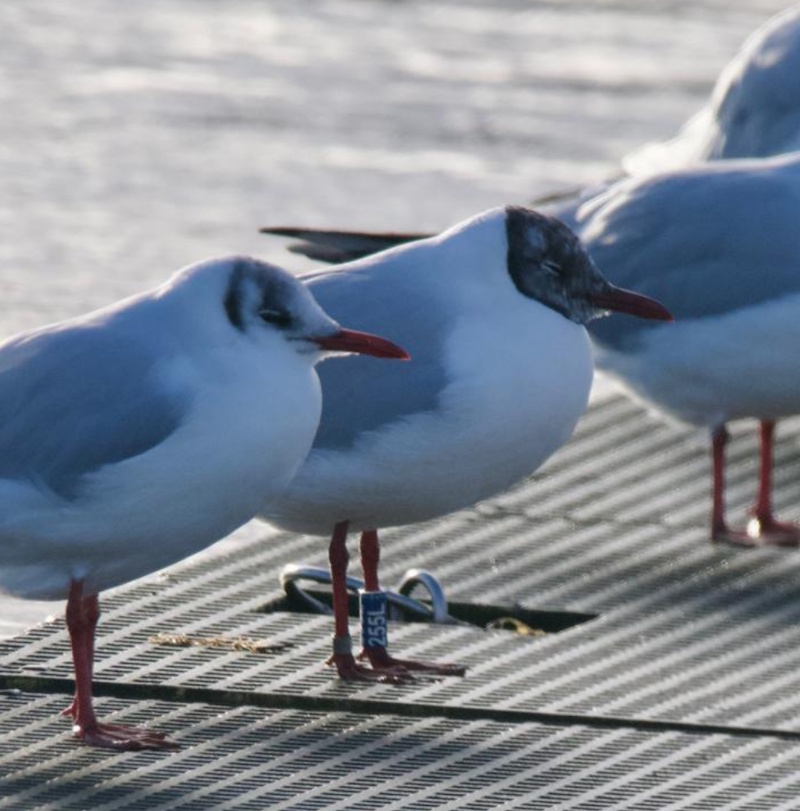
Blue 255L
Ringed at West Kirby 17/12/2023.
Recorded at Park Yuzhnyy, Kaliningrad, Russia, in April 2024
and at West Kirby Marine Lake on 05/01/2026.
This was ringed by the very active Waterbird Colour-marking Group, we don't know how many they have ringed in West Kirby and this is only the second one we've re=sighted - the other one being Blue 256L in 2024, ringed on the same date as 255L.
Kaliningrad is a 'new' site for our database.
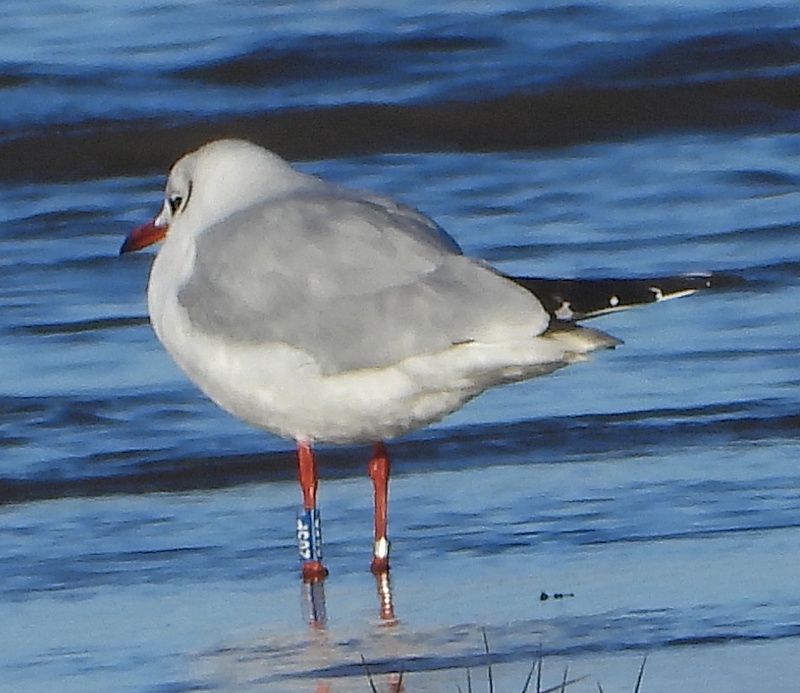
Blue 205P
Ringed at Salford Quays, Salford, on 07/11/2023 where it has
since been sighted a further 13 times outside the breeding season, last
record being 05/12/2025.
Recorded at Hoylake on 05/01/2026.
Another one ringed by the Waterbird Colour-marking
Group, maybe the icy weather brought it to the coast.
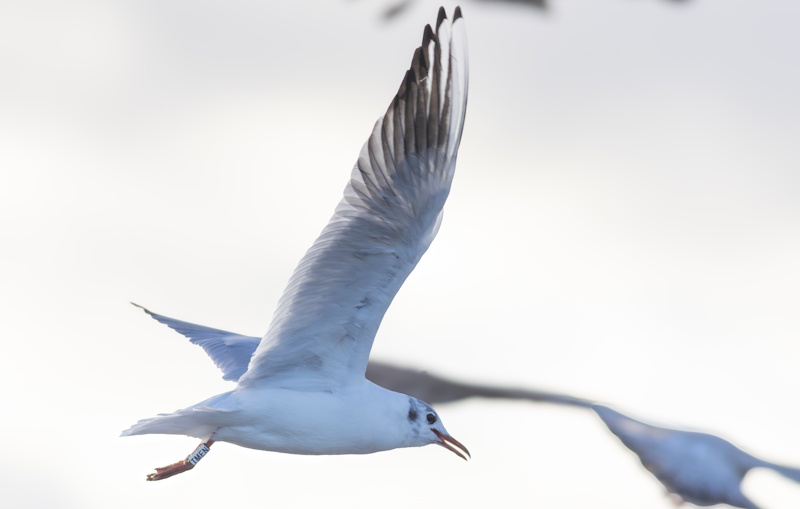
White TMEN
Ringed near Lodz (west of Warsaw), Poland, on April 2013 as an adult.
Easlily our most regularly recorded ringed Black-headed Gull and seen
at West Kirby and nearby sites every winter since it was ringed, as
well as back breeding in Poland a few times. The reason for showing
this yet again in this Report is that this sighting, on Jan 5th, was
the first record since September so we were concerned that something
may have happened to it - most winters we see it almost every week!
Knots
There is an article on its way with an update on the
Liverpool Bay Marked Knot Project, and I'll probably put it in the
April 2026 Newsletter. In the meantime here is a selection of some of
the Knots we've recorded over the past few weeks.
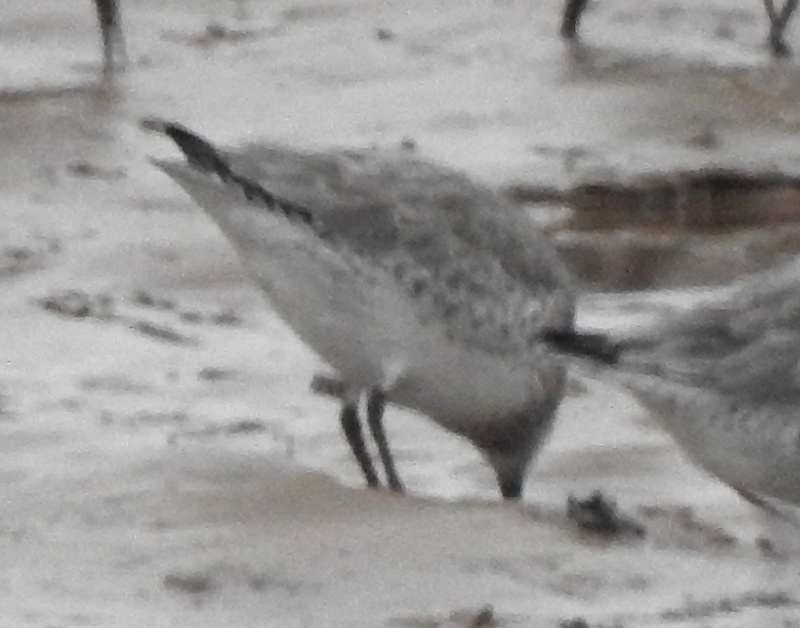
White flag (2KL or 2KY)
This
blurry photo, taken in grey early morning light, is of a Canadian
ringed Knot. Despite the unpromising image Steve managed to track down
the ringing group and the ringer was able to narrow it down to one of
two birds that they had ringed in 2023. I quote (Kevin Young):
We are a research group from the Université du Québec à Rimouski studying the birds in the high Arctic. Our core objective working with shorebirds in Alert is monitoring ruddy turnstone and red knot use of the area through banding, flagging, and measuring condition during the spring and fall. We use traditional techniques like fat scoring the birds, in addition to other physiological methods like ultrasound to measure muscle thickness as they develop or deplete their migration-ready flight muscle.
Kevin goes on to say that it is a significant effort working in Alert
to catch and flag these birds. Having read where Alert is that didn't
surprise us - it's just 520 miles from the North Pole, and is the
northernmost permanently inhabited place on Earth!
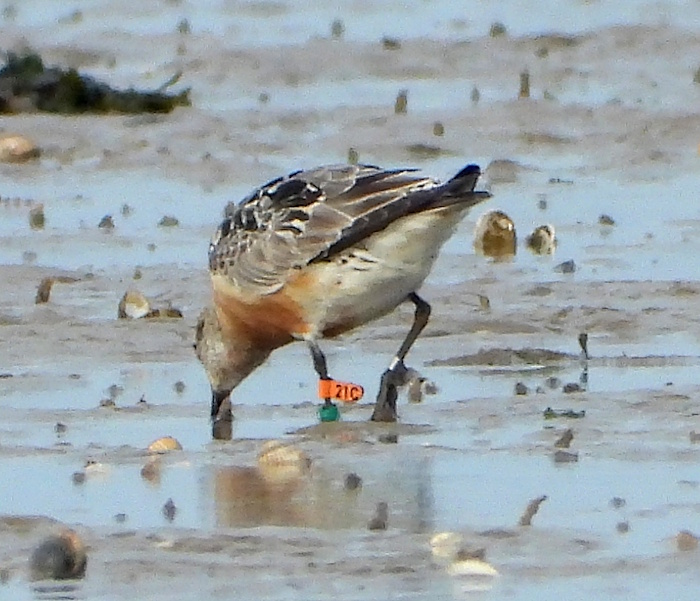
Oflag(21C)
Ringed at Hoylake in November 2022.
This Knot has been recorded 37 times since being ringed, being seen
regularly at Meols including December 2025, and has also been sighted
at Ainsdale, Formby, Seaforth, Leasowe and Thurstaston. It has also
been recorded every May in Iceland with 17 sightings on the west coast,
less than an hour's drive north of Reykjavik, at an inlet called
Grunnafjördur where the Knots love to feed up before their onward
journey to Canada.
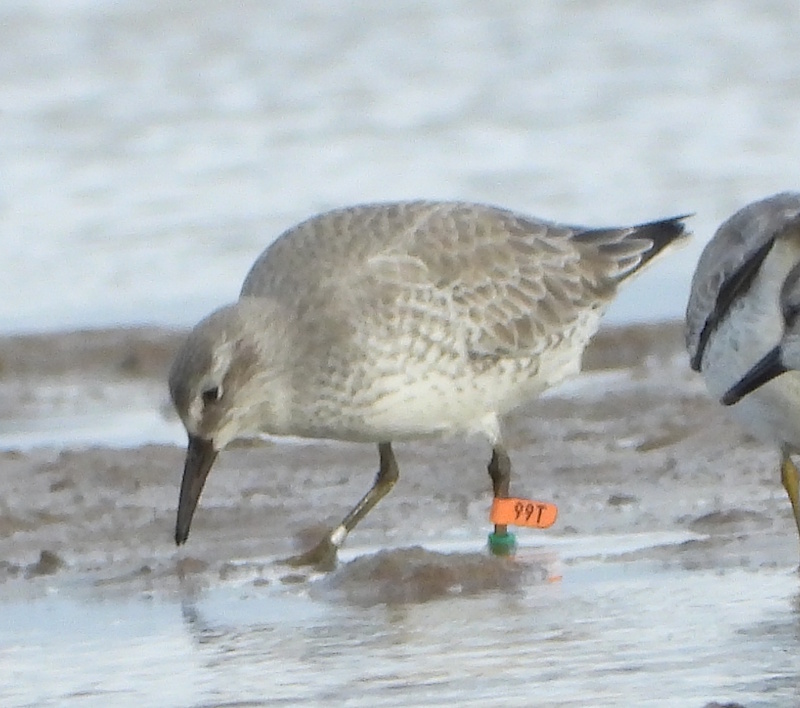
Oflag(99T)
Ringed at Ainsdale in May 2024, as a 1CY bird.
After being ringed in May 2024, 99T spent the following summer (June to August)
at Leasowe and Seaforth. That winter (2024/25) it was recorded several
times at Meols, West Kirby and Thurstaston. This curent winter there
has, so far, been only one record - at Meols on 17/01/2026.
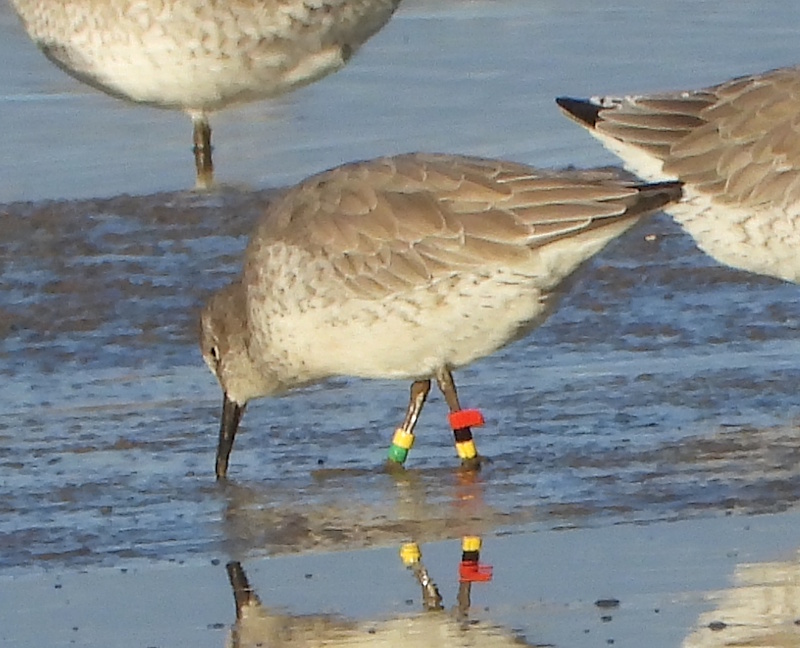
R3NYYG
Ringed at Griend, Dutch Waddensea, in October 2024.
This bird has only been sighted at two locations: once at Snettisham
in October 2025, and 10 times at Meols, including 22/11/2025 and
04/01/2026 this winter.
Since their project started in 1998, the Dutch
(Royal Netherlands Institute for Sea Research - NIOZ) have ringed
thousands of Knot of both the subspecies which pass through the
Waddensea - islandica and canutus. We always look forward to
seeing them, if you click on this link you will find out more
information and also an explanation of the ring codes used.
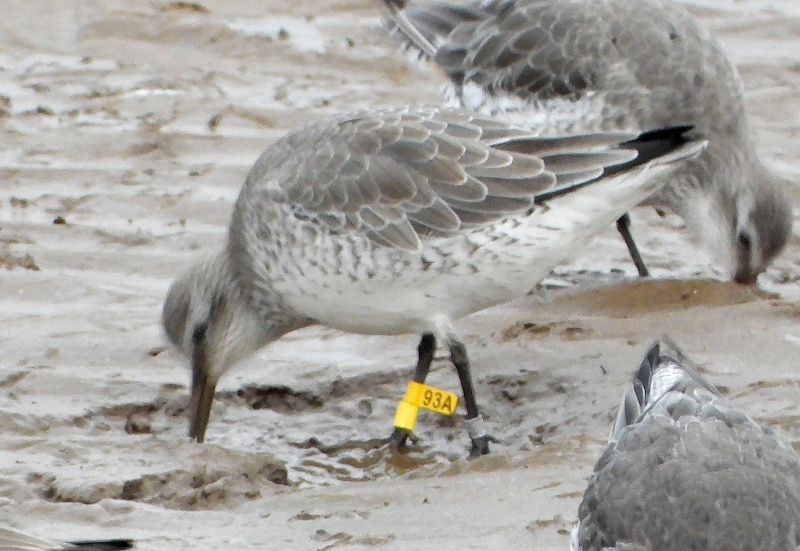
Yellow Flag (93A)
Ringed in western Iceland in May 2025.
Recorded at Thurstaston on 26/11/2025 and Meols on 05/12/2025.
All the yellow flagged knots we see here have either
been ringed in northern Norway or in Iceland, a scheme organised by Red
Knot expert Jim Wilson. His team ringed several hundred Knot in western
Iceland in May 2025, we have seen several of these this winter, including 93A.
Colour Rings were recorded by Richard
Smith, Stephen
Hinde, Tony Ormond, Elliot Monteith, Stan Davidson, Steve Williams and
Alan Hitchmough.
Richard Smith
January Bird News
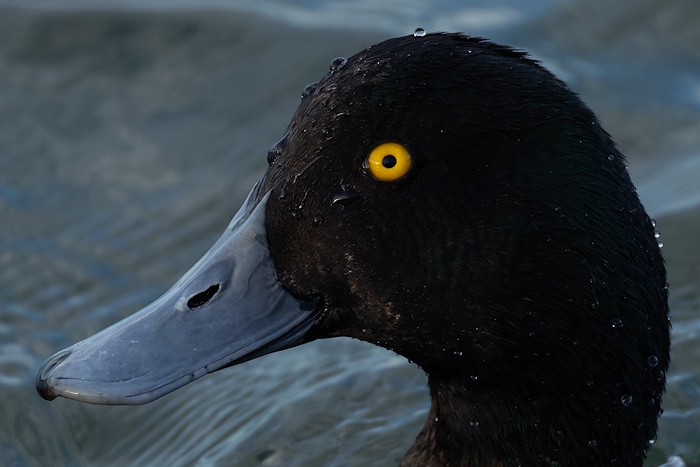
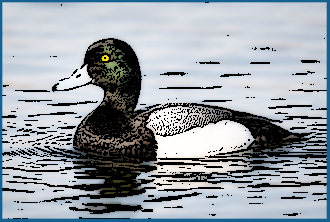
A drake Scaup was on West Kirby Marine Lake for
most of the month, sometimes drifting close to the prom giving good
opportunities for photos.
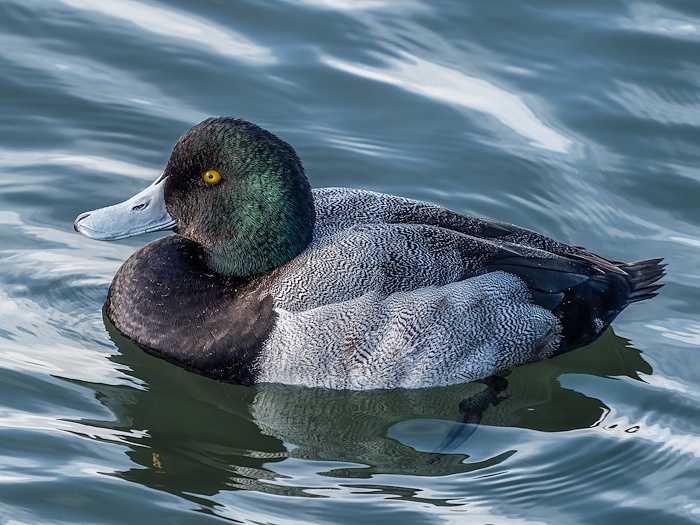
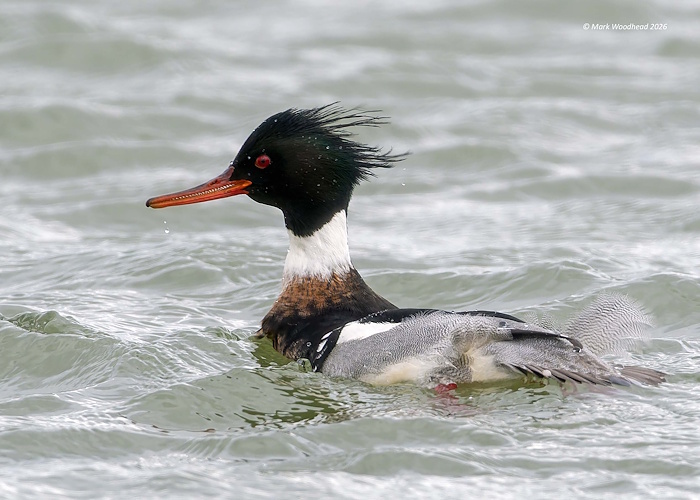
It wasn't the only duck preesent and we
also had up to six Goldeneyes and six Red-breasted Mergansers, as well
as the more usual flock of Goosanders. Brent Geese visited most days
and we had a max count of 26 on the 14th, with similar numbers at
Hoylake and Thurstaston. The main flock was out at Hilbre where 325
were counted at the end of the month. Two White-fronted Geese where in
a field by Burton Mere Wetlands on the 10th
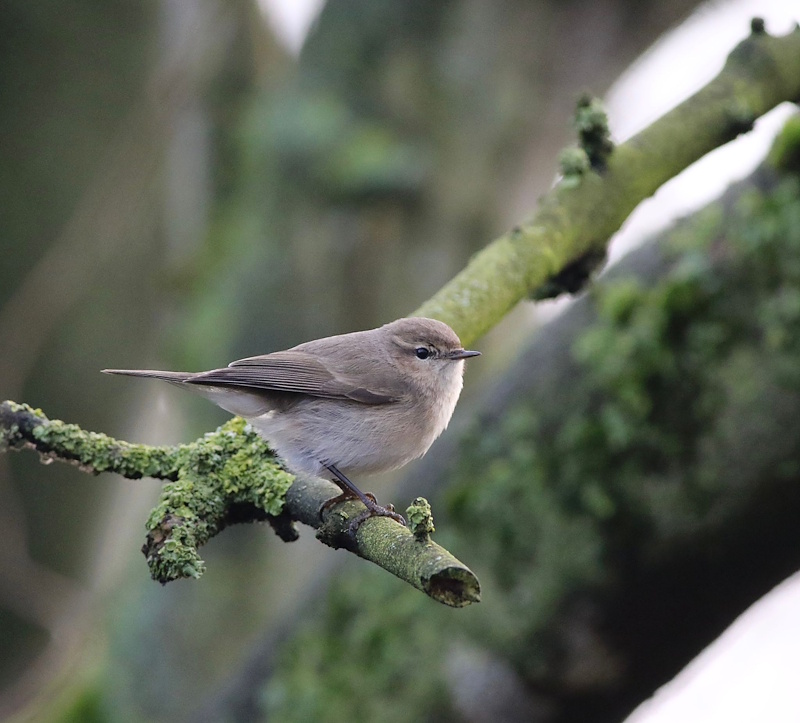
A Siberian Chiffchaff showed well in trees near
Leasowe Lighthouse, first seen on the 15th before staying several days.
A Shorelark was spotted at the northern end of West Kirby Marine Lake
on the 16th. Unfortunately it was only seen by one person and it was
dark by the time news got out, and there was no sign the following
morning. At Gronant one to two Snow Buntings were on the beach for most
of the month.
It remains a good winter for Short-eared Owls,
most days saw at least two at both Parkgate and Denhall Quay, with a
max count of four at both locations. There were a few sightings of a
Bittern, usually flying into the rost site at Parkgate late afternoon,
but there was only one report of a ringtail Hen Harrier.
Out to sea a calm day on the 19th resulted in a very
good count of at least 440 Great Crested Grebes off Meols and Leasowe,
although there was little sign of any build up of Common Scoters as yet.

What to expect in February
February is normally a month when we look forward to
some big tides covering the marsh at Parkgate, unfortunately 2026 is
one of those years where no really big tides are forecast although the
weather may change that. There are three 9.7m tides forecast in
February (see below) and we will need a strong westerly wind and a deep
low pressure for it to bring the sea up to Parkgate, so I would think
about going to Riverbank road, Heswall, where the tide comes in a lot
earlier than Parkgate and there should still be plenty of birds to see.
Pink-footed Geese will certainly be showing themsleves in their
thousands giving a spectacle of both sight and sound, as well as plenty
of other wildfowl and waders plus Hen Harriers, Marsh Harriers and
Short-eared Owls.
A calm day on the Liverpool Bay coast can result in good, if distant, views of thousand of Common Scoters and there is always the possibilty of Velvet Scoters, Long-tailed Ducks etc.
Probably the first sign of the coming spring will be
the arrival of Avocets at Burton Mere Wetlands around mid-month, and we
are likely to see the start of a spring passage of Stonechats along the
coast, north Wirral being particularly favvoured. We may also see the
early arrival of other spring migrants such as White Wagtails.
February Highest
Tides (Liverpool Gladstone Dock):
3rd 12.06hrs (GMT) 9.7m
4th 12.46hrs (GMT) 9.7m
20th 12.54hrs (GMT) 9.7m